
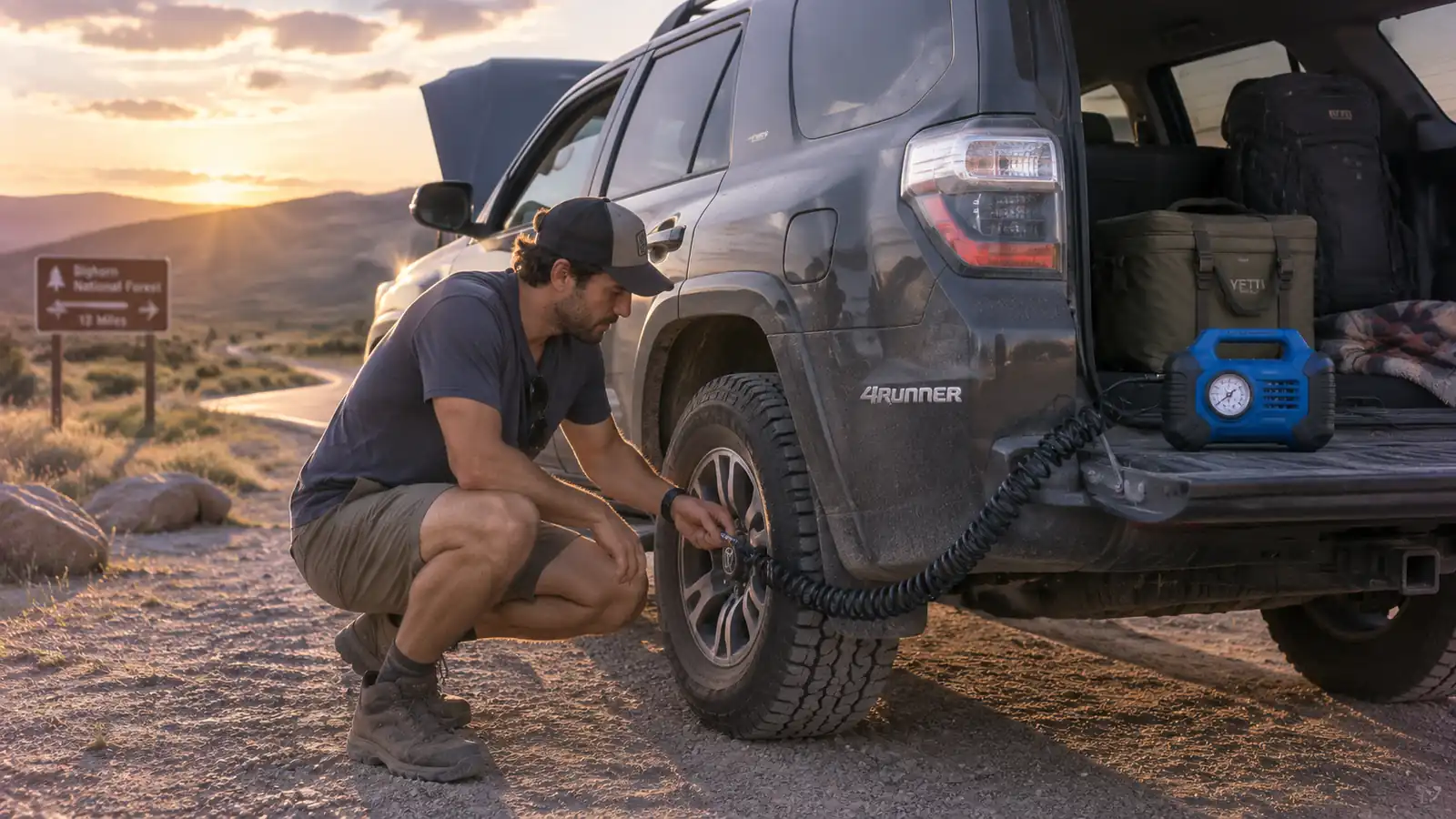
Rennie and I keep the AstroAI inflator wedged behind the rear seat of the 4Runner, in the same spot every trip, right next to the tow strap. It has been there for a little over a year now, through stretches of Idaho, Oregon, and Nevada backroad driving where the nearest gas station with a working air pump was sometimes forty-five minutes away. Most trips it never comes out. A few trips it's the difference between handling a small problem in the parking lot of a rest stop and limping into a tire shop with a slow leak that's gotten worse over sixty miles.
The One Thing That Turns a Flat Into a Non-Event
A slow leak two hours from the nearest town is a different problem when you're carrying your own compressor instead of hoping a gas station's pump still works.
Amazon Check Today's Price on Amazon →Gas station air pumps are not reliable anymore
This is the reason we started carrying one in the first place. More small-town gas stations have pulled their air pumps entirely, and the ones that remain are frequently broken, coin-eaten, or reading pressure that's clearly wrong. On a trip through eastern Oregon two summers ago, we stopped at three different stations before finding a pump that actually worked. A 12V inflator in the trunk means you stop needing to find one at all.
Cold mornings drop tire pressure without any warning
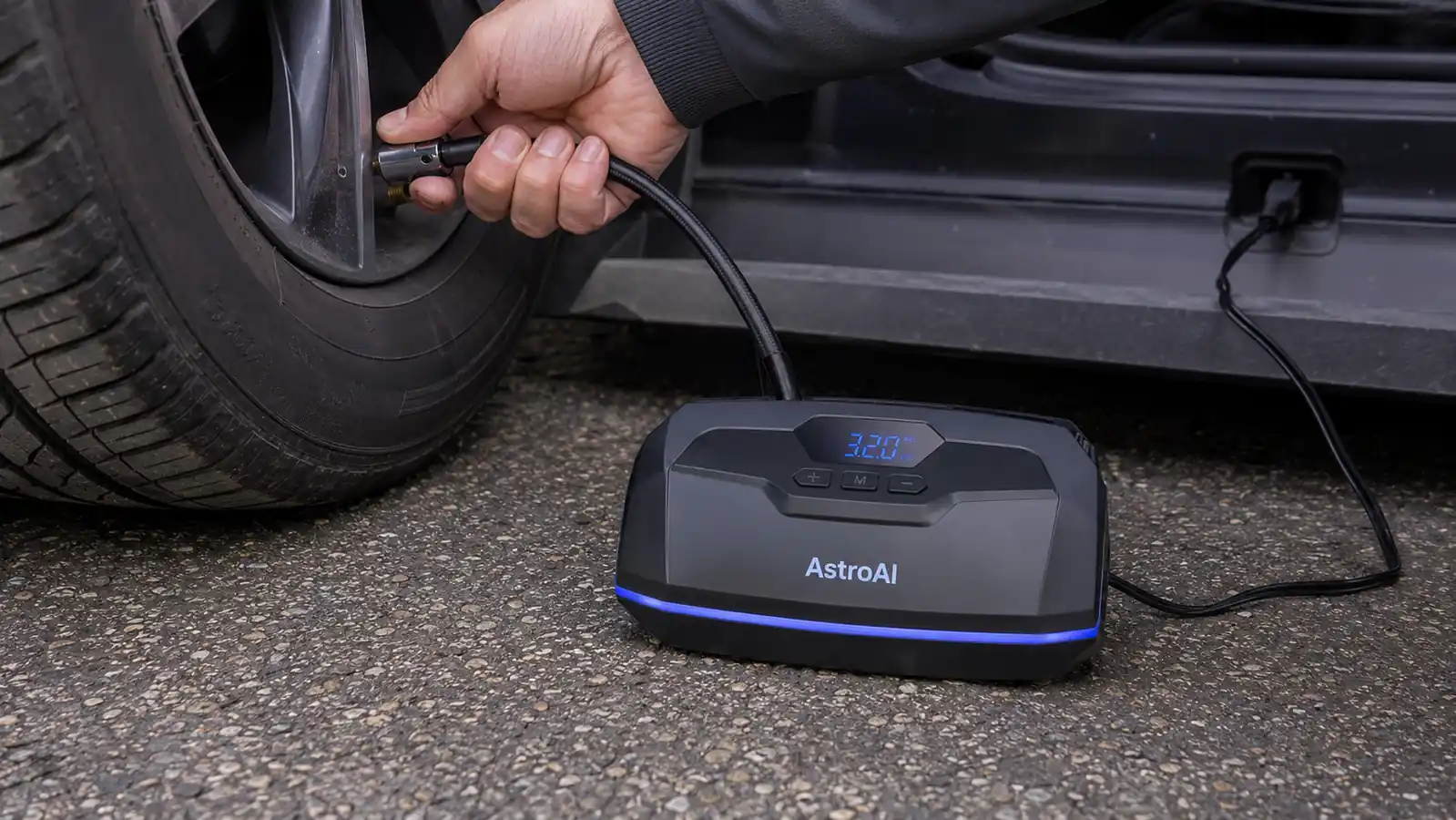
Tires lose roughly 1 PSI for every 10-degree drop in temperature, which means a tire that reads fine at 6 p.m. can trigger a low-pressure warning light by 6 a.m. the next morning if the temperature dropped 20 or 30 degrees overnight, which it regularly does in high desert country. The AstroAI has a digital gauge that reads out the exact number, so instead of guessing whether the light is a real problem or just a cold-weather blip, we top off to the door-jamb placard PSI and move on in a couple of minutes.
It plugs straight into the vehicle's 12V outlet, no separate battery to charge
The unit runs off the vehicle's own 12V outlet with a 9.8-foot cord, so there's no separate battery pack to remember to charge before a trip. That matters to us because we're bad about remembering to charge things. It's either in the truck and ready, or it's not in the truck, and there's no third option where it's in the truck but dead.
Auto shut-off means you can't accidentally overinflate a tire
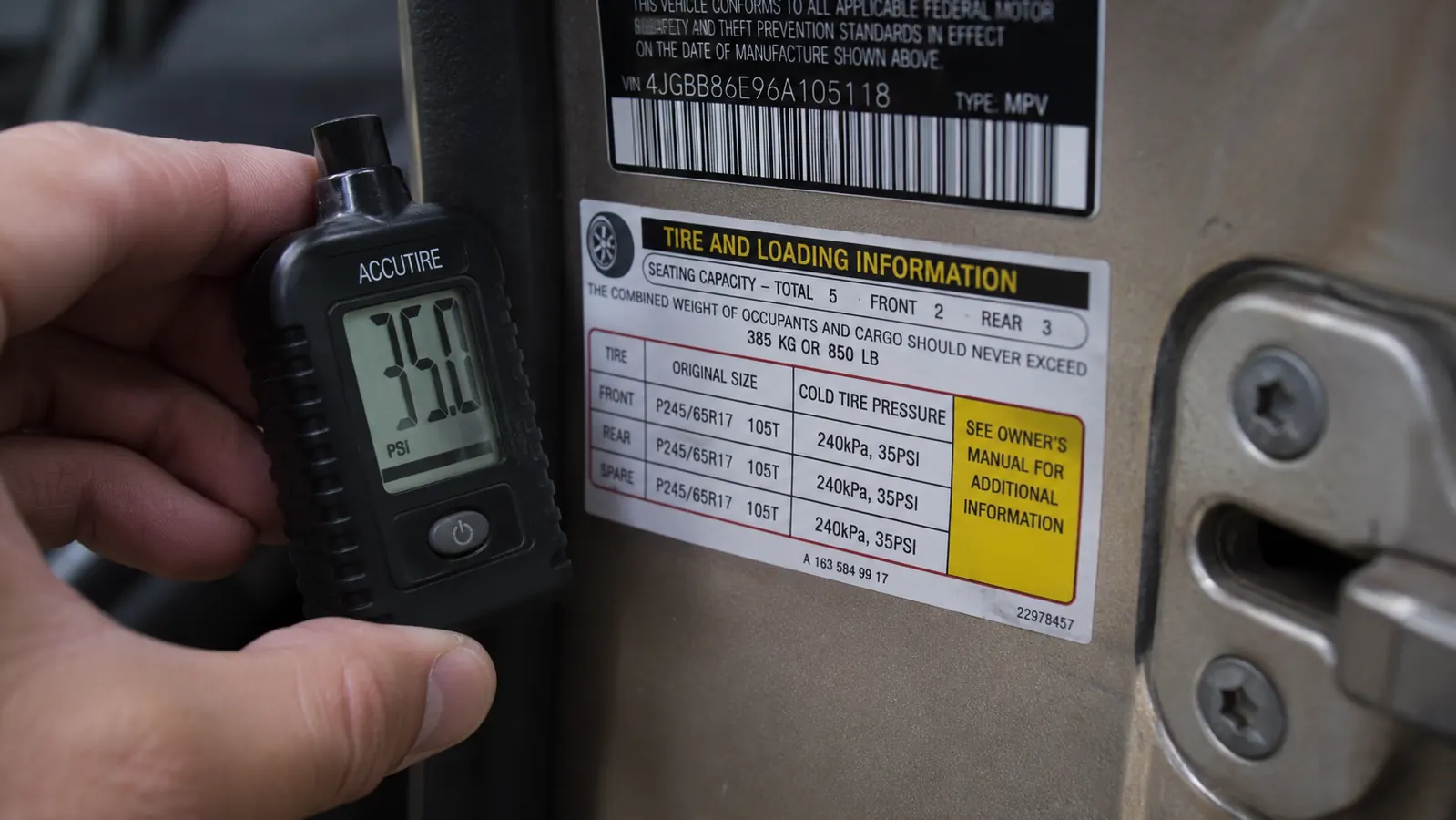
You set the target PSI on the digital display, and the unit shuts itself off once it hits that number instead of running until you notice and pull it off. That auto shut-off is the feature I trust the most, honestly, because it takes the guesswork out of the part where you're kneeling next to a tire in a gas station lot trying to read a gauge and watch a clock at the same time. If you want the full walkthrough of setting the number correctly, our <a href="/how-to-check-tire-pressure-on-road-trip">guide to checking tire pressure on a road trip</a> covers exactly where to find your vehicle's actual recommended PSI.
It fills a tire from flat to road-ready faster than you'd expect
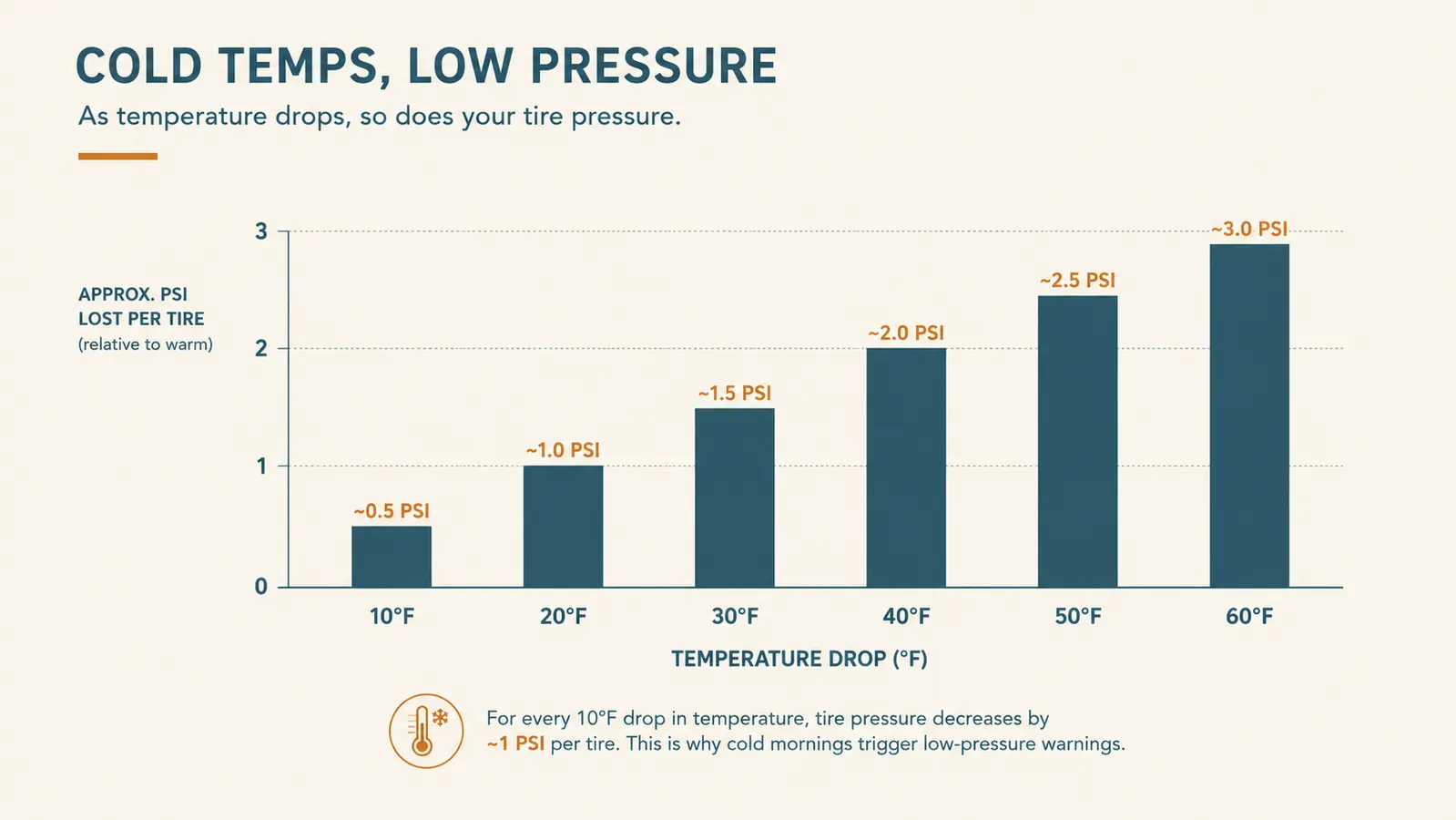
AstroAI rates this unit to fill a standard passenger tire from empty to around 35 PSI in a few minutes, and in a year of use that's held up close to true, faster on smaller tires, a bit slower on the 4Runner's larger ones. That speed matters most on the shoulder of a highway, where every extra minute is a minute you're standing near moving traffic.
The LED light actually gets used, not just for show
It has a built-in LED light on the housing, and I assumed we'd never touch it until the first time we needed to check a tire after dark at a rest area with no working overhead lighting. It's not a floodlight, but it's enough to see the valve stem and read the gauge without holding a phone in your teeth. Small feature, used more than I expected.
It tops off a slow leak, it does not fix a real tire problem
This is worth saying plainly. This inflator is for maintaining correct pressure and buying time on a slow leak, not for patching a puncture or repairing a tire that's been damaged by a blowout. We carry a plug kit separately for actual punctures. The inflator's job is getting you safely to a shop or a place to deal with the real repair, not replacing that repair.
It works on more than just car tires
We've used it on the truck's tires most of the time, but it also handles bike tires, the air mattress we bring for camping, and a half-flat kayak fender we forgot to top off before a launch. It's not marketed as a multi-tool, but having one inflator that covers most of what needs air on a trip means fewer separate gadgets rattling around the cargo area.
It's held up to a year of being tossed in and out of the cargo area
It doesn't live in a padded case. It gets tossed in with the tow strap, the tire plug kit, and whatever else lives back there, and gets pulled out and used on pavement, gravel, and once on the side of a muddy pullout. A year in, the housing shows some scuffing but the gauge still reads accurately against a separate reference gauge we checked it with, and the shut-off still works. We wrote up the complete durability breakdown, including the one part that's started to feel a little loose, in our <a href="/astroai-tire-inflator-review-long-term">full long-term AstroAI review</a>.
It changes how you think about remote driving
The biggest shift isn't any single use, it's the background confidence. Once you know you can correct a tire pressure problem yourself, the stretches of highway with no cell service and no gas station for sixty miles stop feeling like a risk you're just accepting. You still watch your tires, you still drive sensibly, but you're not white-knuckling every dashboard light the way you might have before.
Amazon Drive remote stretches with one less thing to worry about →
What I'd Skip
It's not a miracle device. The cord length is generous but it still means parking close enough to a 12V outlet, which can be awkward if your outlet placement is odd or you've got a full cargo area blocking the reach. The gauge, while accurate against our reference gauge, is still a small digital screen, and reading it in bright direct sun takes a squint. It also runs the vehicle's engine or battery while it's working, so it's not meant for extended use with the engine off. And again, it tops off pressure, it does not repair a puncture, patch a sidewall gash, or replace a tire damaged in a blowout. If you're looking for something that fixes tires rather than maintains them, this isn't that tool, and treating it as one would be a mistake.
It doesn't fix a bad tire. It just means a slow leak on a remote stretch of highway stops being an emergency and starts being a two-minute stop.
Carry the Fix Before You Need It
A year of road trips through remote stretches of the West, and this is the piece of gear we've never once regretted packing. Check today's price and specs before your next drive.
Amazon Check Today's Price on Amazon →