
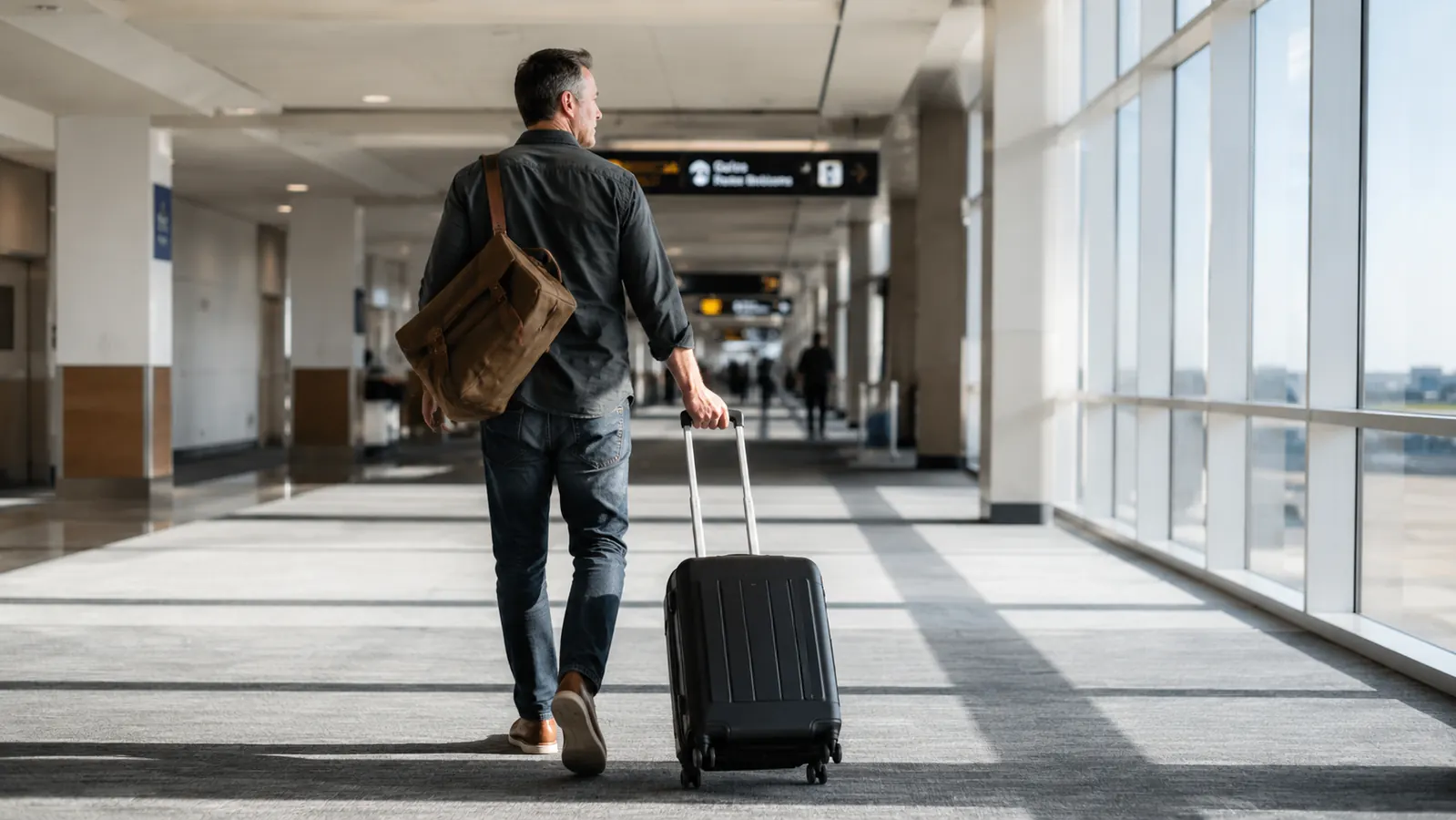
I've caught more early flights out of Boise than I can keep straight in my head, and the version of me who used to check a bag retired a few years back. What changed wasn't discipline, it was swapping a soft duffel for a hardside spinner, specifically the Amazon Basics 21-inch carry-on, and paying attention to how much dead time a carry-on actually removes from a travel day once you pick a case that behaves itself and doesn't fight you at the gate.
This isn't a list of vague airport folklore. Every reason below is something that's happened to me or my wife Rennie on an actual flight, at an actual gate, with an actual case. I've had the same one for well over a year of frequent domestic flying now, and it's earned enough scuffs to tell me what actually matters versus what's just marketing. Airlines set their own carry-on limits, and those limits shift without much notice, so a common domestic guideline like 22 x 14 x 9 inches is a starting point to check against your specific airline before you fly, not a rule carved in stone.
The case I stopped thinking about is the one that keeps saving me time
Same Amazon Basics hardside carry-on, over a year of flights, still rolling straight and still fitting the sizer without a fight. Here's the one I use.
Amazon Check Today's Price on Amazon →You skip baggage claim entirely
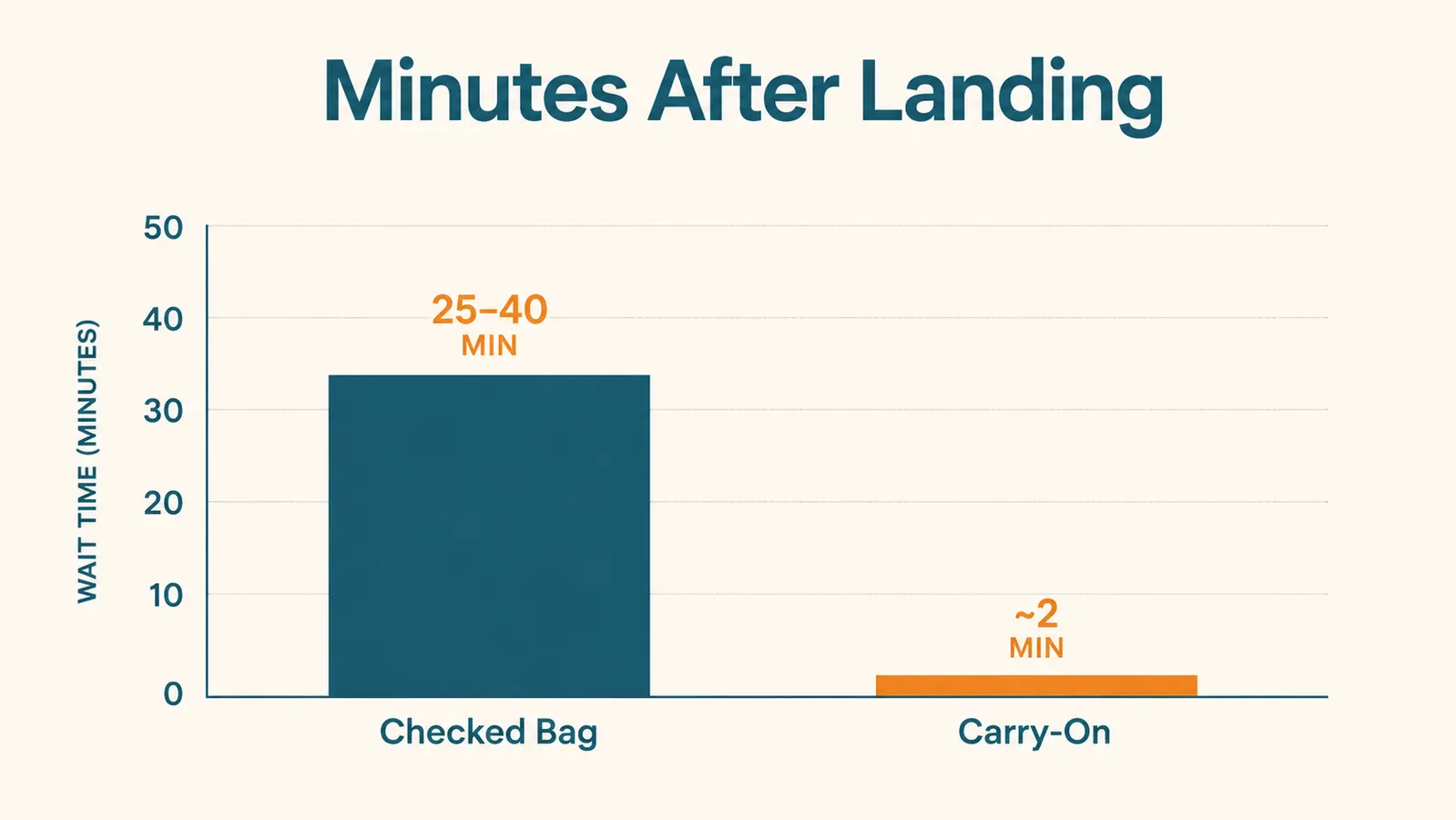
This is the obvious one, but it's worth saying plainly: no bag on the belt means no standing in a crowded claim area watching a chute for twenty minutes while other flights' bags come out first and yours never seems to. I clear the terminal doors while people from my own flight are still checking the monitor for their carousel number. The full <a href="/amazon-basics-carry-on-review-long-term">long-term review</a> covers how the case has held up over a year of exactly this routine.
You're never the reason for a missed connection
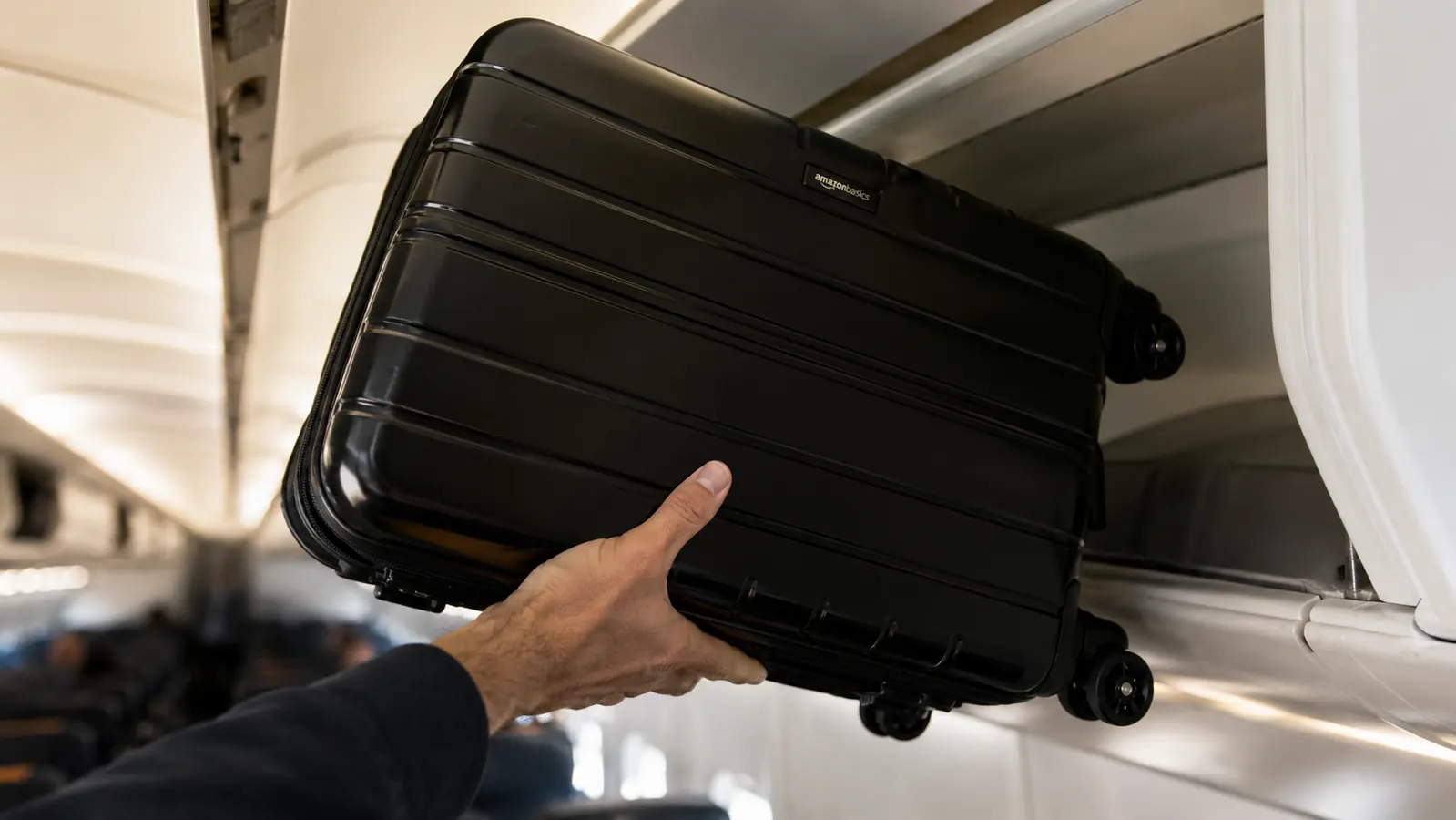
Checked bags get misrouted, delayed on the tug, or simply left behind on a tight turn between flights when the ground crew is racing the clock. A carry-on that fits under the seat or in the bin travels exactly as fast as you do, no exceptions, no separate timeline. On a 45-minute connection through Denver last winter, that difference was the entire trip.
Rolling beats dragging, every terminal, every time
The spinner wheels on a hardside case turn 360 degrees, so you push it beside you at a walking pace instead of yanking a duffel strap over one shoulder the whole way. Over a mile of terminal, which is a normal distance in plenty of airports, that adds up to real minutes and a lot less shoulder fatigue by the time you reach the gate, especially with a laptop bag stacked on top.
The hard shell survives the last-row gate shove
When boarding gets tight and the flight attendant is jamming rollaboards into whatever space is left, a hard shell just gets shoved and pops back to shape without complaint. A soft-sided bag gets crushed against a metal bin edge and the contents shift or get pressed flat, which you don't discover until you're unpacking at the hotel and wondering why your shirts look like they went through a press.
You clear security screening faster
One rigid bag with a flat, consistent profile goes through the X-ray belt clean and rarely needs a second look the way an overstuffed soft bag sometimes does when its shape confuses the scanner operator and triggers a manual check. It's a small savings per trip, but it compounds fast if you fly as often as we do.
No standing around wondering if your bag made it
With a checked bag, there's a stretch of time after landing where you genuinely don't know if your luggage boarded with you at all, especially after a tight connection. With a carry-on sitting in the bin two rows up, that low-grade anxiety just doesn't exist. You know exactly where your stuff is for the entire flight, connections included.
You can grab a rideshare the second you're off the jet bridge
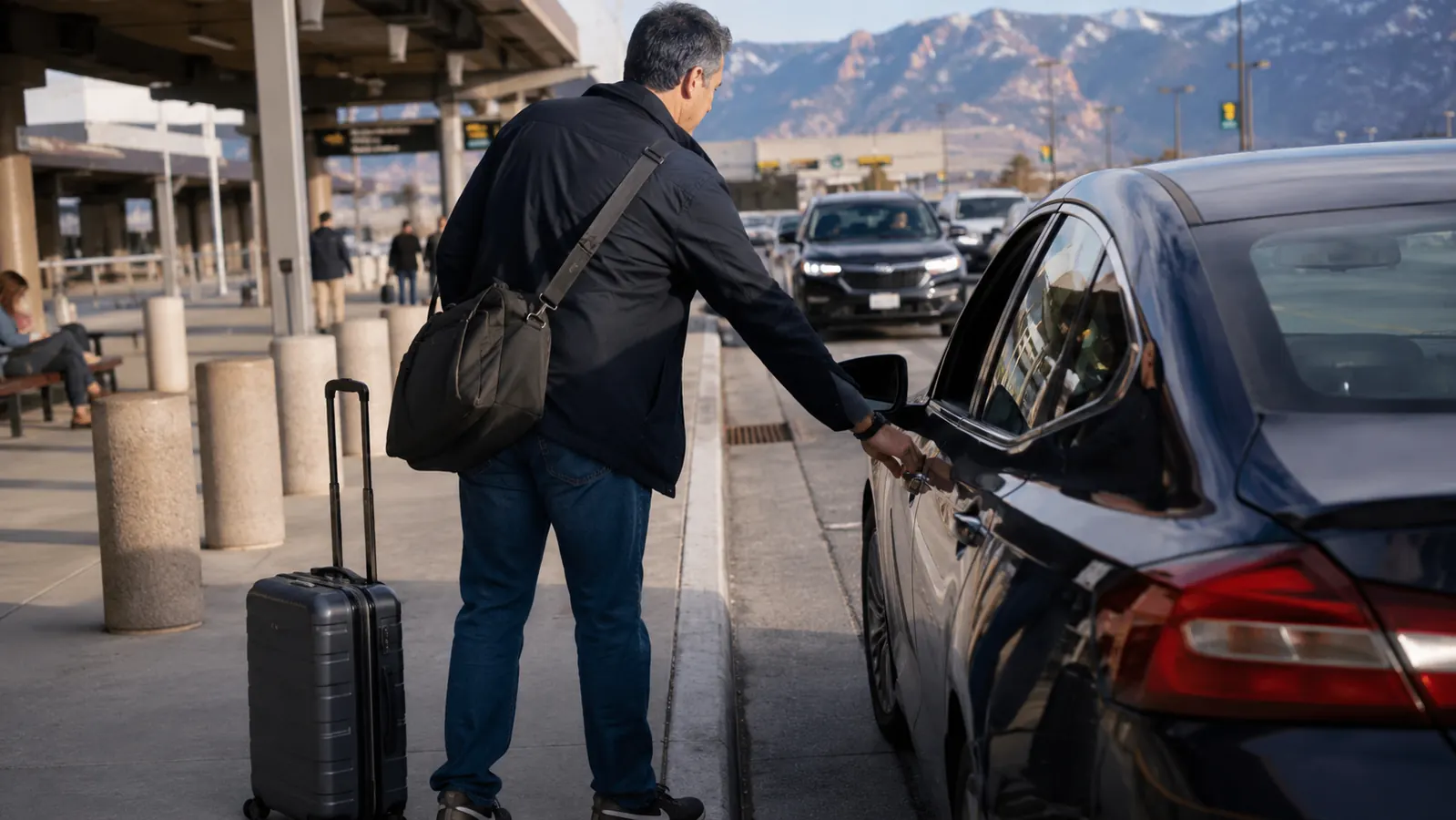
No detour to baggage claim means the rideshare pickup happens while other passengers are still walking toward the carousel, phones out, checking app updates for a driver who hasn't even been assigned yet. On a trip where my driver was circling the pickup lot twice, I still beat half my own flight to the curb.
Packing gets predictable instead of a guessing game
A hardside shell has a fixed interior volume, so once you've packed it a few times you stop wondering what will fit and what won't, trip after trip. Our full packing breakdown in <a href="/how-to-pack-carry-on-avoid-checked-bag-fees">how to pack a carry-on and avoid checked bag fees</a> goes step by step through the order that gets the most into that fixed space without forcing the zipper shut.
Boarding stops feeling like a race for bin space
When your bag reliably fits the airline's sizer and the overhead bin, you're not sprinting to board early just to guarantee room before it fills up on a full flight. I board in whatever group I'm called and still find space, because the case's dimensions are consistent flight to flight instead of a gamble each time I fly a new route.
Even if it gets gate-checked, the contents come out fine
Occasionally a full flight forces a gate check anyway, no matter how you packed or how early you boarded. A hard shell protects what's inside far better than a soft duffel does when it's tossed into cargo with everyone else's bags. I've had this happen twice and never once opened the case afterward to find anything crushed or leaking.
What I'd Skip
I'll be honest about where a hardside carry-on falls short, because the format only works if I name the tradeoffs instead of pretending there aren't any. If you're the kind of packer who counts on a soft bag's give to cram in one more sweater or a last-minute souvenir, a rigid shell won't bend for you the way canvas will, expansion is limited to a single zippered gusset at best and that's it, there's no forcing a few more inches out of it. It's also a boxier shape, so oddly sized items like a tripod or a stack of hardcover books don't nestle into the corners the way they would in a duffel.
And a hard shell shows scuffs and hairline scratches more visibly than fabric ever will, my Amazon Basics has a faint scrape near one wheel well from a rough baggage cart handler in Salt Lake City that I noticed the first time I set it down under fluorescent light. None of that has made me go back to soft-sided, but it's worth knowing before you buy, especially if you care about how the case looks after a year rather than just how it performs on any single trip.
The time savings isn't in any one moment. It's in never having a moment where you're just standing there, waiting on your own bag to catch up to you.
Stop losing twenty minutes at every landing
The case that's held up through a year of my own frequent flights, still fits the sizer, still rolls straight.
Amazon Check Today's Price on Amazon →