
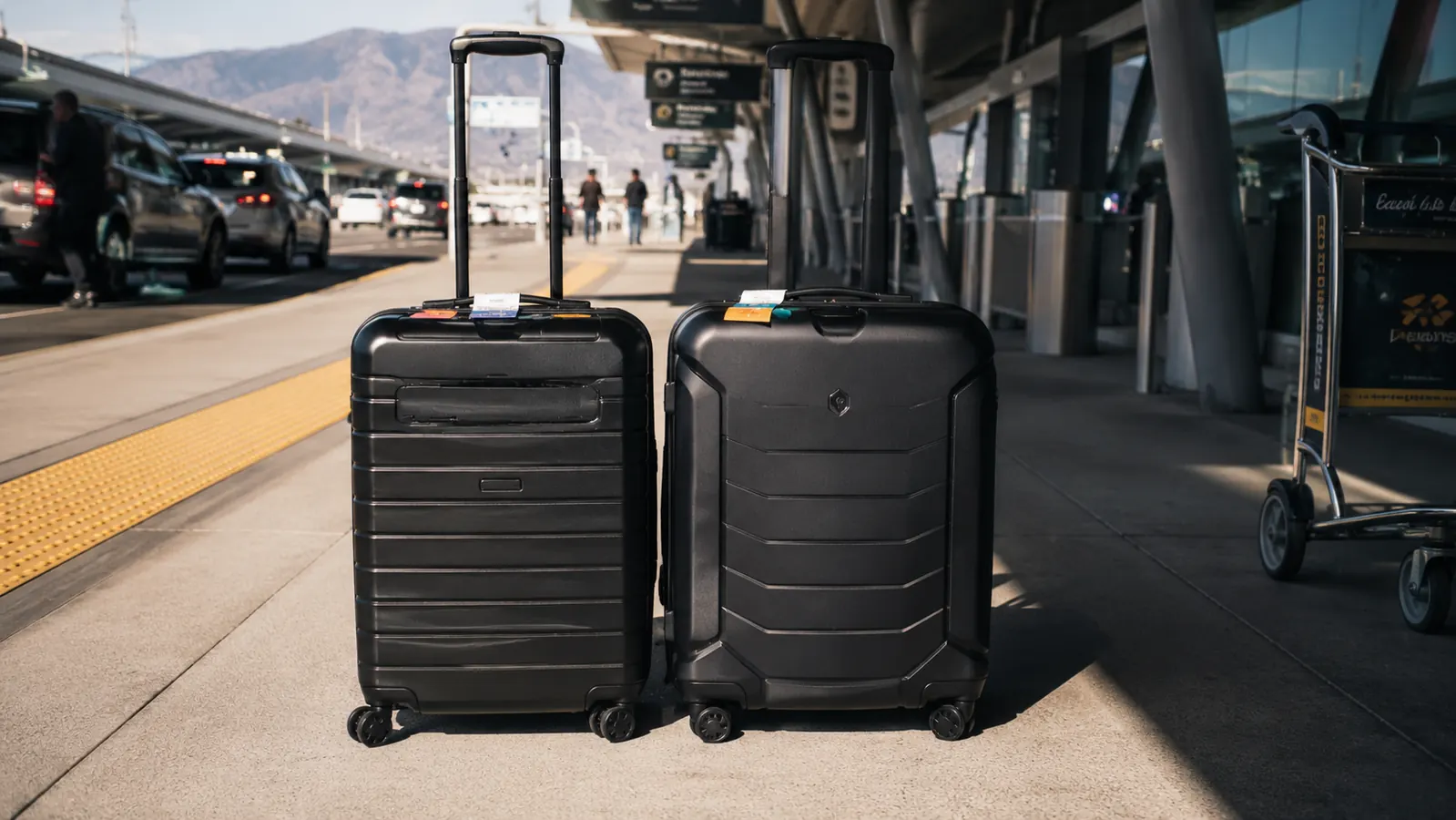
I've dragged my share of carry-ons through the security line at Boise's regional airport, and I've wedged a bag behind the driver's seat of my 4Runner on road trips with my wife Rennie more times than I can count. Somewhere along the way I ended up owning both ends of the hardside spectrum at once: the Amazon Basics 21 inch hardside I've now flown and driven with on close to a dozen trips, and a Samsonite Freeform I borrowed from Rennie's sister for six weeks specifically so I could run this comparison side by side instead of guessing from memory. If you're standing in an airport shop right now or scrolling on your phone trying to decide, here is the short answer. The Amazon Basics bag does most of what the Samsonite does, for a fraction of what Samsonite asks, and the gap that remains is real but a lot narrower than the price difference implies.
Where that gap actually shows up is wheels, weight, and what happens down the road when something eventually breaks, because something breaks on every bag that gets used instead of admired on a closet shelf. Below is what I found, row by row, followed by an honest read on who should spend the extra money and who is better off pocketing the difference.
How I Tested Both Bags
I didn't just set both bags on a scale and call it a comparison. I packed the Amazon Basics for six actual trips out of Boise this year, two flights and four road stretches in the 4Runner, and I kept the borrowed Samsonite in rotation for six straight weeks, alternating which bag Rennie and I checked or carried depending on the trip. Same clothes, same packing cubes, same overhead bin fights on the same regional jet, so any difference in how they rolled, latched, or held up was about the bag and not about how it got used that particular week.
I weighed both bags empty on the same kitchen scale, rolled them over the same cracked sidewalk seam outside my house a dozen times each, and ran the zippers through the same overpacking stress test, stuffing each bag past its comfortable limit and forcing the zipper shut. None of that replaces years of ownership, but six weeks of real, alternating use told me more than a single trip ever could, and it's the same standard I hold every review to on this site.
| Amazon Basics 21in Hardside | Samsonite Comparable Hardside | |
|---|---|---|
| Shell material | ABS and polycarbonate blend, some visible flex when you press on a panel | Curv thermoplastic composite on the Freeform line, stiffer and noticeably more impact-resistant |
| Wheels | 4 dual spinner wheels, standard plastic housings, roll fine on tile and carpet but louder over rough pavement | 4 spinner wheels with sealed bearings, quieter and smoother over curb cuts and cracked sidewalks |
| Warranty | 1-year limited warranty handled through Amazon customer service | 10-year limited warranty backed by an actual authorized repair network |
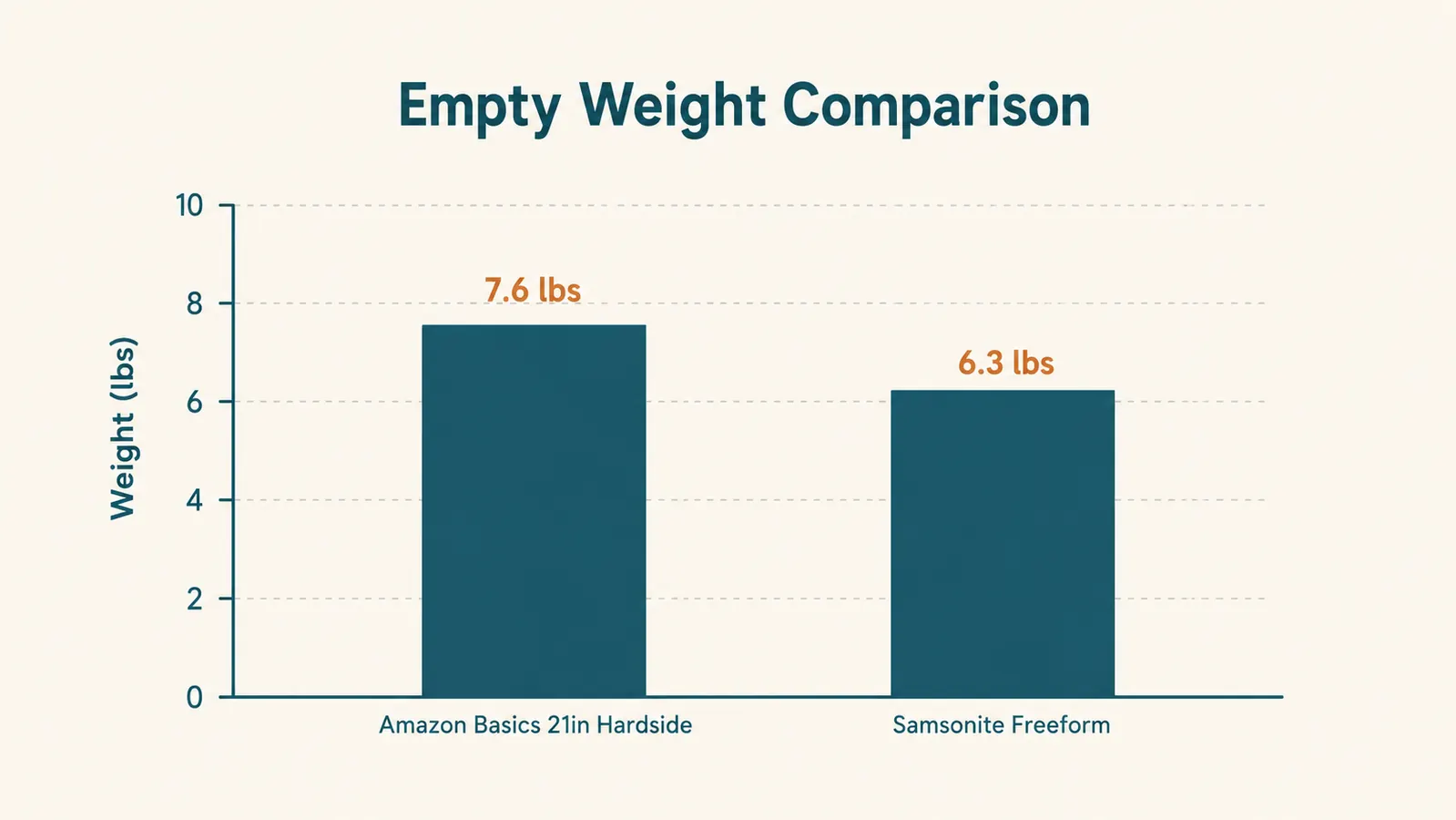
| Weight (empty) | 7.6 lbs on my kitchen scale | 6.3 lbs, a difference you feel the moment you lift it into an overhead bin |
| Capacity | Expands up to 25% more space through a zippered gusset, roomy for the size | Similar expansion mechanism, slightly less raw interior volume at the same external footprint |
| Repairability | No authorized repair network, a broken wheel or zipper usually means replacing the bag | Authorized repair centers can replace a wheel, zipper, or handle, sometimes covered under warranty |
| Handle feel | Telescoping aluminum handle, two lock heights, a bit of side-to-side wobble fully extended | Telescoping handle with a firmer lock, almost no wobble even fully extended |
| Price tier | Budget tier, well under half of what a comparable Samsonite typically costs | Premium tier, several times the cost for the Freeform line at retail |
Where the Amazon Basics Carry-On Wins
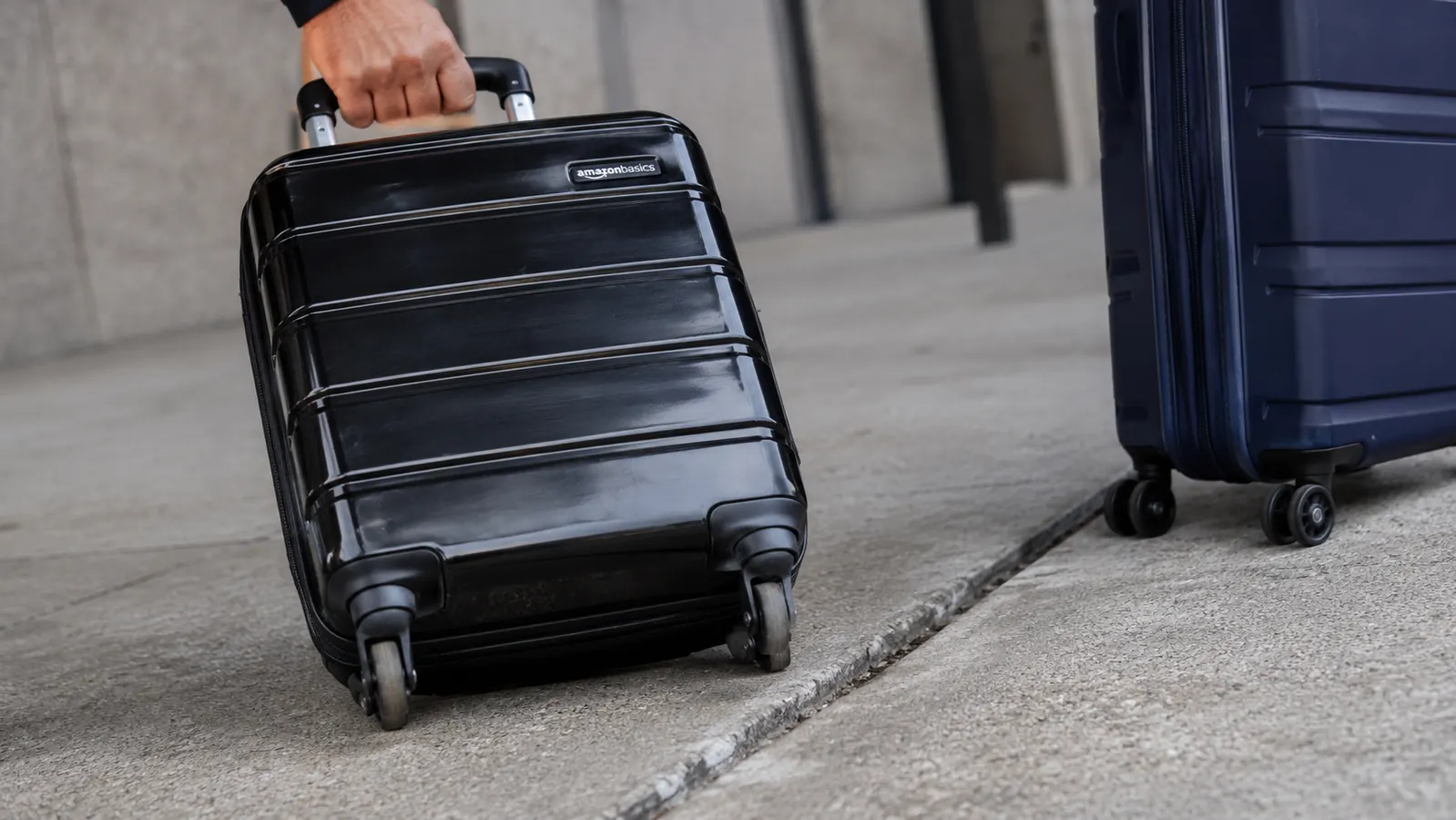
The obvious win is price relative to what you actually get, and it holds up better than I expected once I had both bags open on my living room floor. The interior on the Amazon Basics is nearly identical in usable space to the Samsonite, same mesh divider panel, same compression straps, same general layout that any hardside shopper would recognize. The zipper pulls feel a step down, a little more plastic in the hand, but they've held through a dozen trips of me forcing the bag shut after overpacking, which is the real test, not how they feel on day one in a showroom. For the price gap between the two bags, you could buy the Amazon Basics twice over and still come out ahead of a single Samsonite Freeform, which matters if you're someone who checks bags occasionally or lends luggage to family before holidays.
The expansion feature is also genuinely useful and not just a marketing bullet point. I used the extra 25 percent of space on a return flight from a work trip when I came home with more than I left with, and the zipper held the extra bulk without straining at the seams the way some cheaper expandable bags do. The telescoping handle locks at two heights that fit both my 5-foot-10 frame and Rennie's, which sounds minor until you've used a bag with a handle that only suits one person's stride. If you want the full month-by-month wear report, including how the wheels held up after repeated flights, I wrote it up in my long-term Amazon Basics carry-on review.
It also comes in enough colors that Rennie and I can tell our bags apart at baggage claim without tagging them, which sounds trivial until you're the third black hardside pulled off the same carousel. The scratch-resistant shell has taken real hits, curb drops, a gate agent tossing it onto the jet bridge cart harder than necessary, and it still looks like a bag from this year rather than one that's been through a dozen trips. That's the kind of durability that matters more to most travelers than a marginal weight savings they'll never actually notice while walking to their gate.
Where the Samsonite Wins
The Samsonite earns its price mostly in two places, and I want to be straight about both because pretending the cheaper bag wins everything would be dishonest. The first is the wheels. Rolling the Freeform through the terminal in Boise, the sealed bearings made an obvious difference over expansion joints and rough pavement, a smoother, quieter roll that the Amazon Basics simply can't match with its standard plastic housings. Over years of repeated travel, that wheel quality tends to be the first thing that separates a bag that ages gracefully from one that starts rattling and dragging after enough trips through baggage handling and cobblestone streets.
The second place Samsonite wins is the warranty, and this is where the math actually shifts for a certain kind of traveler. A 10-year limited warranty backed by real repair centers means that if a wheel snaps off or a zipper blows out on trip forty, you send it in and get it fixed instead of buying a whole new bag. The Amazon Basics carries only a 1-year warranty with no dedicated repair network behind it, so past year one you're on your own if something fails. For someone who flies weekly for work and racks up serious mileage on a bag, that repair network alone can justify the premium over a long enough ownership period, even if it never feels that way on the day of purchase.
There's also a long-haul checked-bag argument for the Samsonite that I didn't fully appreciate until I watched a baggage handler sling it onto a belt loader with zero regard for what was inside. The stiffer Curv shell shrugged off an impact that would have left a visible dent or crack on a softer polycarbonate blend, which matters if your trips regularly involve gate-checking on a regional jet or handing the bag to an airline instead of carrying it yourself the whole way. If your travel pattern includes a lot of rough handling outside your own control, that shell stiffness is buying you real peace of mind, not just a nicer feel in the showroom.
Get 90 percent of the premium bag's function without the premium price tag.
The Amazon Basics 21 inch hardside expands, spins, and locks like bags twice its price, and it's held up through a dozen real trips so far.
Amazon Check Today's Price on Amazon →The Tradeoffs Nobody Mentions
Six weeks with the Samsonite parked next to my Amazon Basics bag turned up a few things neither spec sheet advertises. The Freeform's lighter Curv shell means less margin when you're forcing an overstuffed bag closed, it flexes less under pressure, which is good for protecting contents but means you feel more resistance if you're trying to jam in one more pair of shoes. The Amazon Basics shell has a little more give, which occasionally works in your favor when you're over capacity and need the zipper to close around something bulky. Neither is objectively better here, it's just a different way of handling the same overpacking problem every traveler eventually creates for themselves.
The other thing I didn't expect was how close the two bags rolled in a straight line. Amazon's marketing implies budget spinners wander and drag, and mine did drift slightly to one side on a smooth airport floor after about eight trips, a wheel alignment issue that never fully corrected itself. The Samsonite tracked straighter the whole six weeks, no drift at all, which is the kind of small annoyance you only notice on a long terminal walk with a connection to make. It's not a dealbreaker on the Amazon Basics, but it's the first real sign of wear I found, and it showed up well before anything on the Samsonite did.
Neither bag's interior organization impressed me more than the other, which surprised me given the price gap. Both use a simple zippered divider on one side and compression straps on the other, and packing cubes fit the same way in either bag since the external dimensions land within an inch of each other. If interior organization is the reason you're eyeing the Samsonite, save your money, that part of the upgrade isn't really there.
The Samsonite doesn't do more, it just does the same things with less friction, and friction is the only thing that costs you anything after the first year of ownership.
Who Should Buy the Amazon Basics
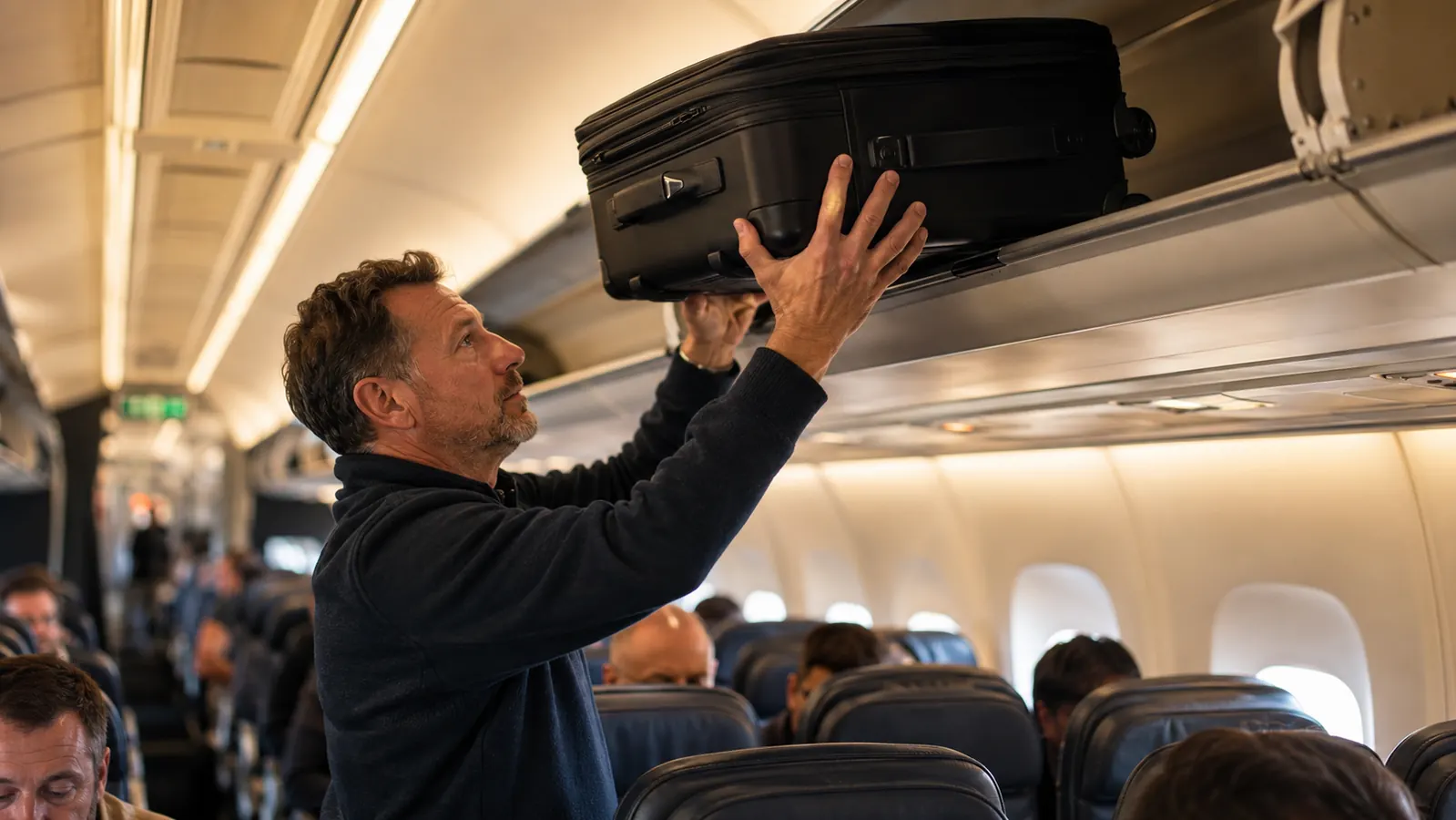
If you travel occasionally, a handful of trips a year, or you're outfitting a household where more than one person needs a carry-on, the Amazon Basics is the sensible call and I'd tell any friend the same thing over dinner. You get the expandable capacity, the spinner wheels, and a shell that's genuinely scratch-resistant for a price that lets you replace it without much regret if your travel habits change. It's also the better pick if you're buying a second or third bag for a family that flies together, since matching four Samsonites for one trip gets expensive fast in a way that matching four Amazon Basics bags simply doesn't.
Who Should Buy the Samsonite
If you fly often enough that wheel quality and a real repair warranty start paying for themselves, or if shaving a pound and a half off your carry-on weight matters because you're already fighting overhead bin space on every flight, the Samsonite Freeform is worth the premium. It's also the right call if you hate the idea of replacing a whole bag over one broken wheel five years from now, since the repair network genuinely extends the useful life of the thing you paid for. I dig into the specific wear points nobody mentions on the budget side, including a zipper snag I didn't expect, in my honest Amazon Basics carry-on review.
Most travelers don't need the Samsonite premium. Here's the bag that gets you there just as reliably.
See today's price on the Amazon Basics 21 inch hardside carry-on before your next trip.
Amazon Check Today's Price on Amazon →