
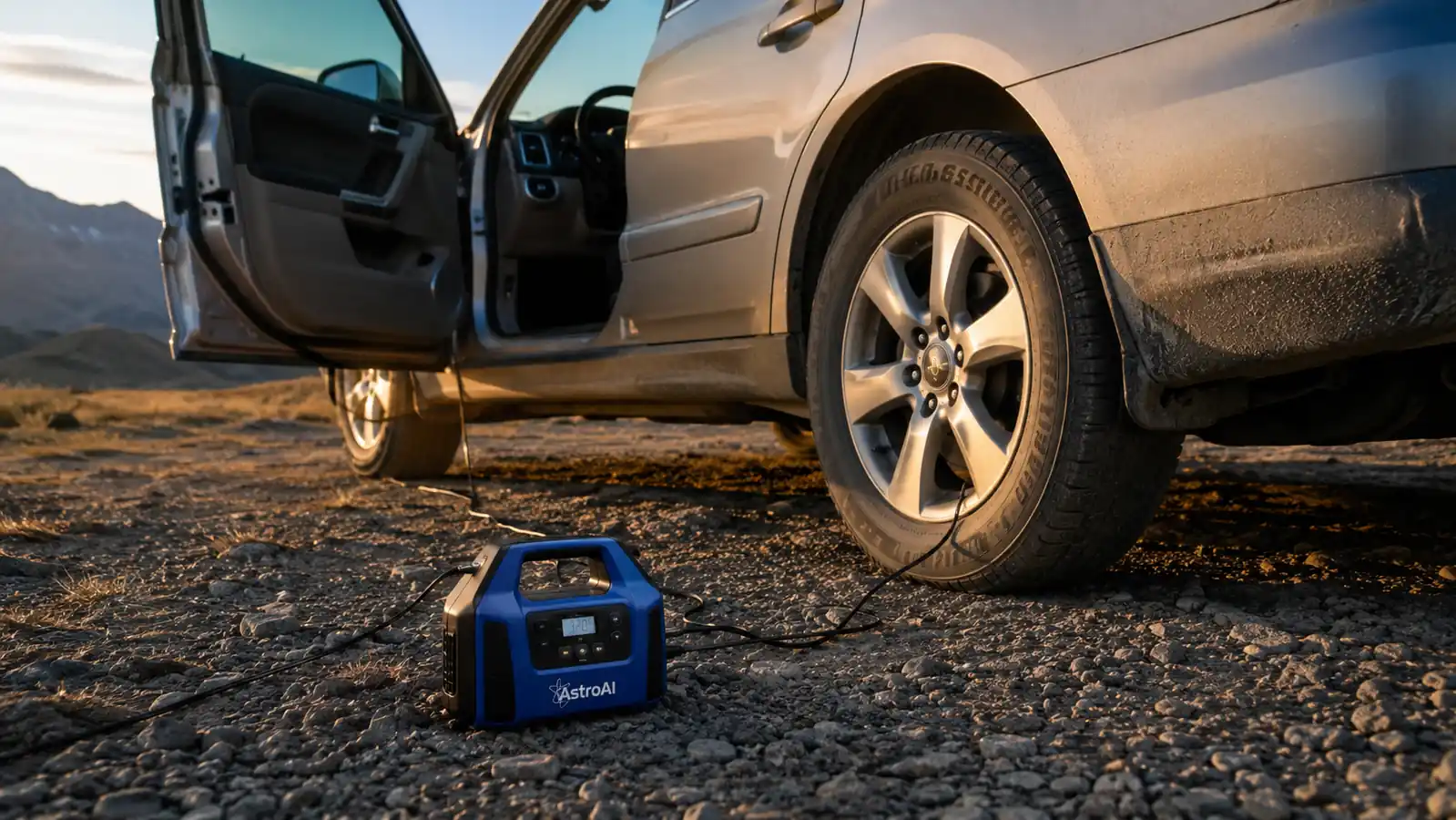
I've had an AstroAI AIRUN H tire inflator riding in the door pocket of my 2018 4Runner for long enough now that the cord has picked up a permanent kink from being coiled the same way every time. My wife Rennie and I put a lot of miles on this truck between Boise and wherever we're headed that month, and a tire that's a few pounds low on a gravel road is not a rare event for us. Most reviews of this pump read like they were written after one good afternoon topping off a driveway tire. Mine is written after using it on shoulders, in parking lots, and once in a hotel garage at eleven at night, and there are a handful of things about owning this inflator that nobody mentions until you've lived with it that long.
This isn't a rehash of the general long-term rundown I've already written on this pump. That piece covers how it's held up overall. This one is narrower and more pointed. It's the stuff that only shows up after you've used the thing enough times to notice a pattern, the kind of detail that doesn't fit neatly into a five-star review but matters a lot the first time it catches you off guard on the side of the road.
The Quick Verdict
A genuinely useful pump that's louder than it sounds in the marketing, slower on real fill times than advertised, and picky about which vehicle socket it's plugged into, but it does the job it promises once you know its limits.
Amazon Check Today's Price →Before You Trust It on the Road, Know Where It Actually Struggles
This is the pump I still keep in the truck, but only because I now know exactly what it can and can't do in one sitting.
Amazon Check Today's Price on Amazon →How I've Used It Since
This inflator has done duty on every tire on the 4Runner at some point, plus a handful of favors for other campers whose own pumps had quit on them. I check tire pressure cold, meaning first thing in the morning before the truck has moved or after it's sat parked for at least three hours, and I go off the placard on the inside of the driver's door jamb, not the max PSI stamped into the sidewall of the tire itself. Those are two different numbers for a reason, and the sidewall figure is the tire's ceiling, not the vehicle manufacturer's recommendation. None of what follows is meant as mechanical advice beyond that basic distinction. If something feels genuinely wrong with a tire, that's a shop visit, not a pump.
I've used it through a full Idaho winter, when the cold snap that always shows up in November drops every tire on the truck by a few PSI overnight, and through a couple of scorching summer stretches on gravel roads outside Moab where the opposite problem shows up, tires running a little high from heat rather than low from cold. Both situations put the pump to work in ways a single test trip never would, and both are where I started noticing the details that follow. Cold mornings made the noise more noticeable, because there's nobody else stirring at a campsite at 6 a.m. Hot afternoons made the heat buildup worse, because the pump itself starts warmer before it even turns on.
What I've done differently over the months is start timing things and paying attention to details I ignored the first few times I used it. How long a fill actually takes. How the housing feels in my hand after tire three. Which socket in which vehicle gives it trouble. Those specifics are what this review is built around, because they're the things I wish someone had told me before I assumed this pump would behave exactly like the listing photos suggested.
How Loud It Actually Gets
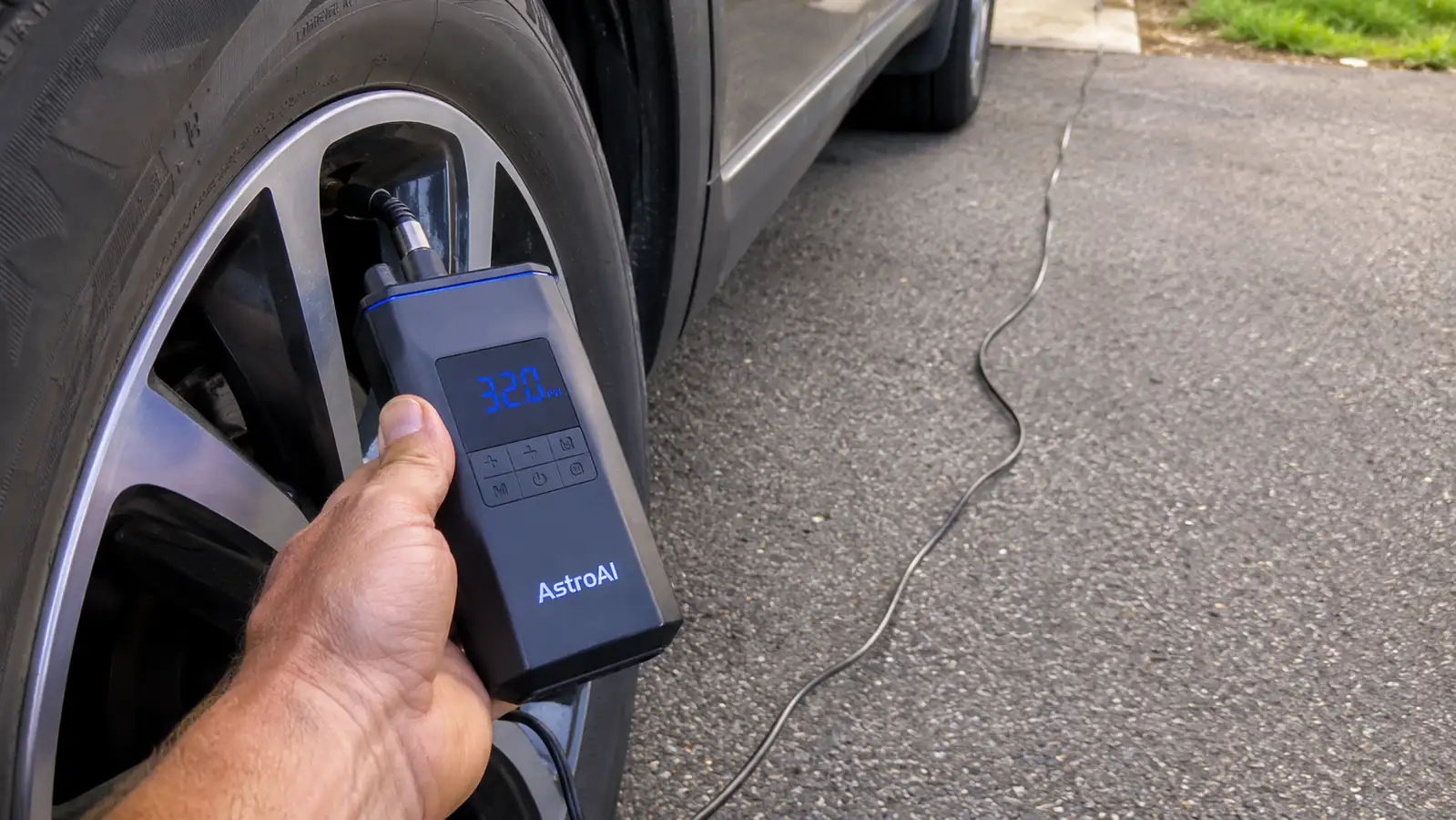
Nothing in the product listing prepares you for the noise. Running a decibel meter app on my phone from about three feet away, this thing sits in the high 70s to low 80s while it's actively pumping, which puts it in the same neighborhood as a shop vacuum or a running garbage disposal. That's not a defect. Small oil-free compressors in this price range are loud by nature, and AstroAI isn't hiding a motor spec sheet from anyone who looks. But the listing photos show it being used in quiet, empty parking lots with nobody around, and the reality is closer to standing next to a leaf blower for several minutes at a stretch.
Where this actually matters is timing. I no longer air up tires early in the morning at a campground where other people are still asleep in tents twenty feet away, because I did that once outside Stanley and got a look from a neighboring site that told me everything. I now do it either mid-morning after the site has woken up, or at a gas station or rest stop where the noise blends into everything else. It's a small adjustment, but it's the kind of thing that only becomes obvious after you've used the pump somewhere quiet by accident.
The Duty-Cycle Limit Nobody Puts in Bold
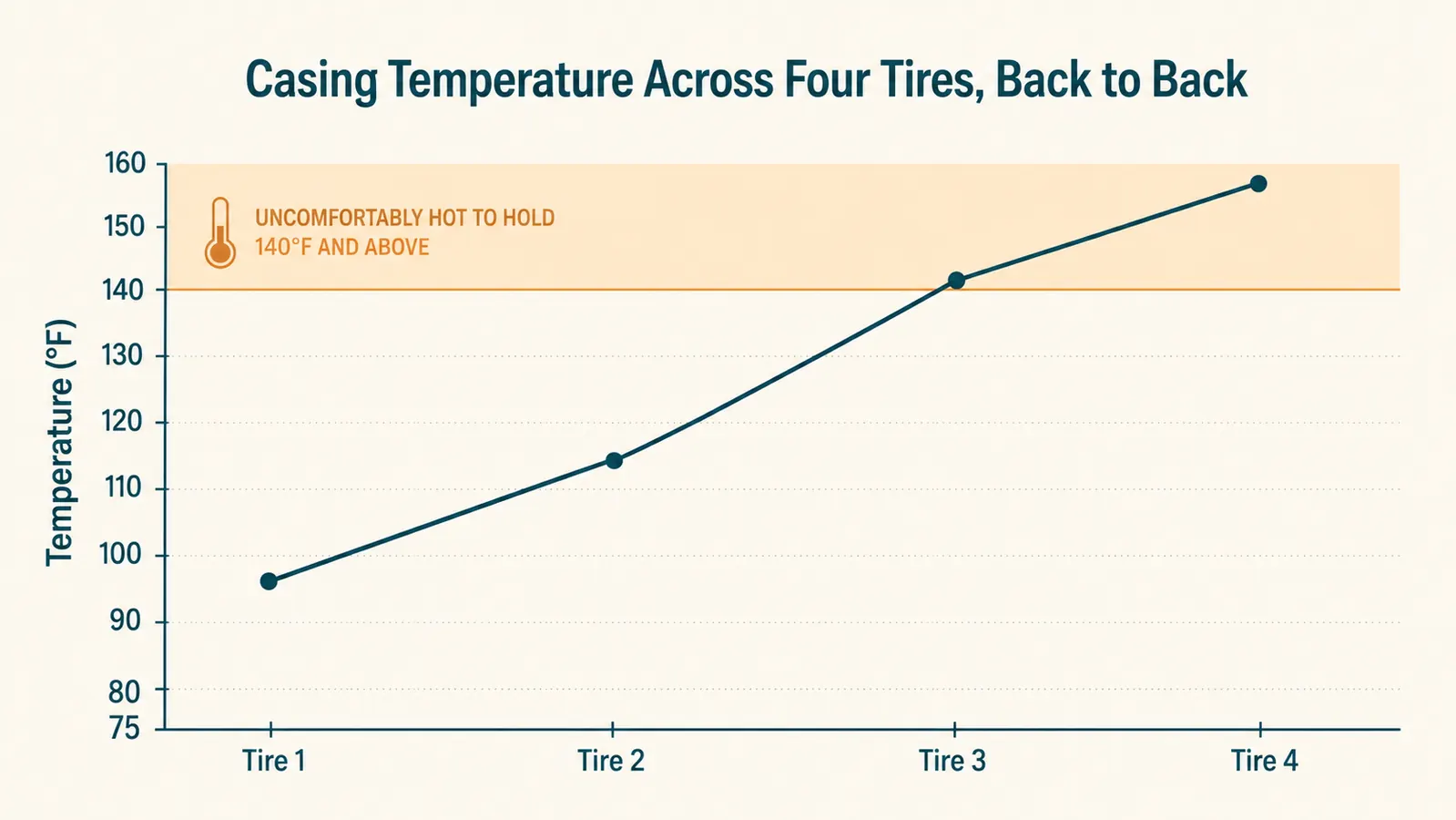
The instructions do mention a duty cycle if you read the fine print, something to the effect of running it for a set number of minutes and then letting it rest before continuing. What that doesn't prepare you for is what happens if you ignore it and just do all four tires back to back because you're in a hurry to get back on the highway. I've done this more than once, and by the third tire the outer casing is genuinely hot to the touch, not warm, hot enough that I've switched which hand I'm holding it with. The motor's pitch changes too, dropping slightly like it's working harder to move the same amount of air.
I logged the casing temperature with an infrared thermometer across four tires done in sequence on a warm afternoon, and it climbed from around 78 degrees before I started to north of 145 degrees by the fourth tire, well past the point where I'd want to keep running it without a break. It hasn't shut itself off or died on me, but it clearly doesn't love being pushed that hard for that long, and I now build in a two or three minute break between the second and third tire on any full round. That single habit change has made the unit feel noticeably less strained, and I'd rather lose five minutes than find out the hard way what happens past the point I measured.
10 PSI Sounds Fast Until You Time It
The marketing language around this class of pump tends to promise quick fills, and technically that's true if you're only adding a pound or two after a long drive warmed the air in the tire slightly. That is not the scenario most people actually buy this pump for. The scenario is a tire that's noticeably low, maybe 10 PSI under where it should be, and I've timed that fill more than once with a stopwatch on my phone. From a genuinely low tire on the 4Runner's stock size, adding 10 PSI has consistently taken somewhere between four and five minutes per tire, not the fast top-off the packaging implies.
That math changes everything if you're doing all four tires in one stop. Budget close to twenty minutes for a full round if more than one tire needs real air, not the five-minutes-and-done impression you'd get from a product video. I don't think this is a mark against the pump specifically, small 12V compressors all move air at roughly the same modest rate, but I do think the marketing sets an expectation that doesn't survive contact with an actually low tire, and I'd rather you know that going in than discover it while you're already late for a checkout time.
The Cigarette Lighter Socket Is the Weak Link
This is the detail that caused me the most trouble, and it has nothing to do with the pump's build quality. It plugs into a standard 12V accessory socket, and that socket is protected by a fuse in your vehicle's fuse box, typically somewhere in the 15 to 20 amp range depending on the vehicle. A hardworking compressor pulling steady current for several minutes is exactly the kind of load that finds a marginal fuse or a corroded socket contact. I learned this in a rental car on a trip where the accessory socket cut out mid-inflation on tire two, and it wasn't the pump's fault at all, it was a socket that had clearly seen better days.
The 9.8-foot cord is genuinely useful for reaching around most of a sedan or a midsize SUV from a single front socket, but on a longer vehicle or with the socket positioned awkwardly, that length gets tight by the time you're working on a rear tire, especially if you also want slack for the hose end to sit comfortably at the valve stem without pulling. I've had to reposition the truck itself more than once just to get enough reach to the rear tire without the cord going taut. If your vehicle has a rear accessory socket, it's worth checking that first rather than assuming one plug near the dash will comfortably reach every corner. On a longer wheelbase truck or a full-size van, I'd plan on the cord reaching two tires comfortably and the other two requiring you to move the vehicle or carry a short extension along.
Gauge Accuracy Drifts, and Here's the Number
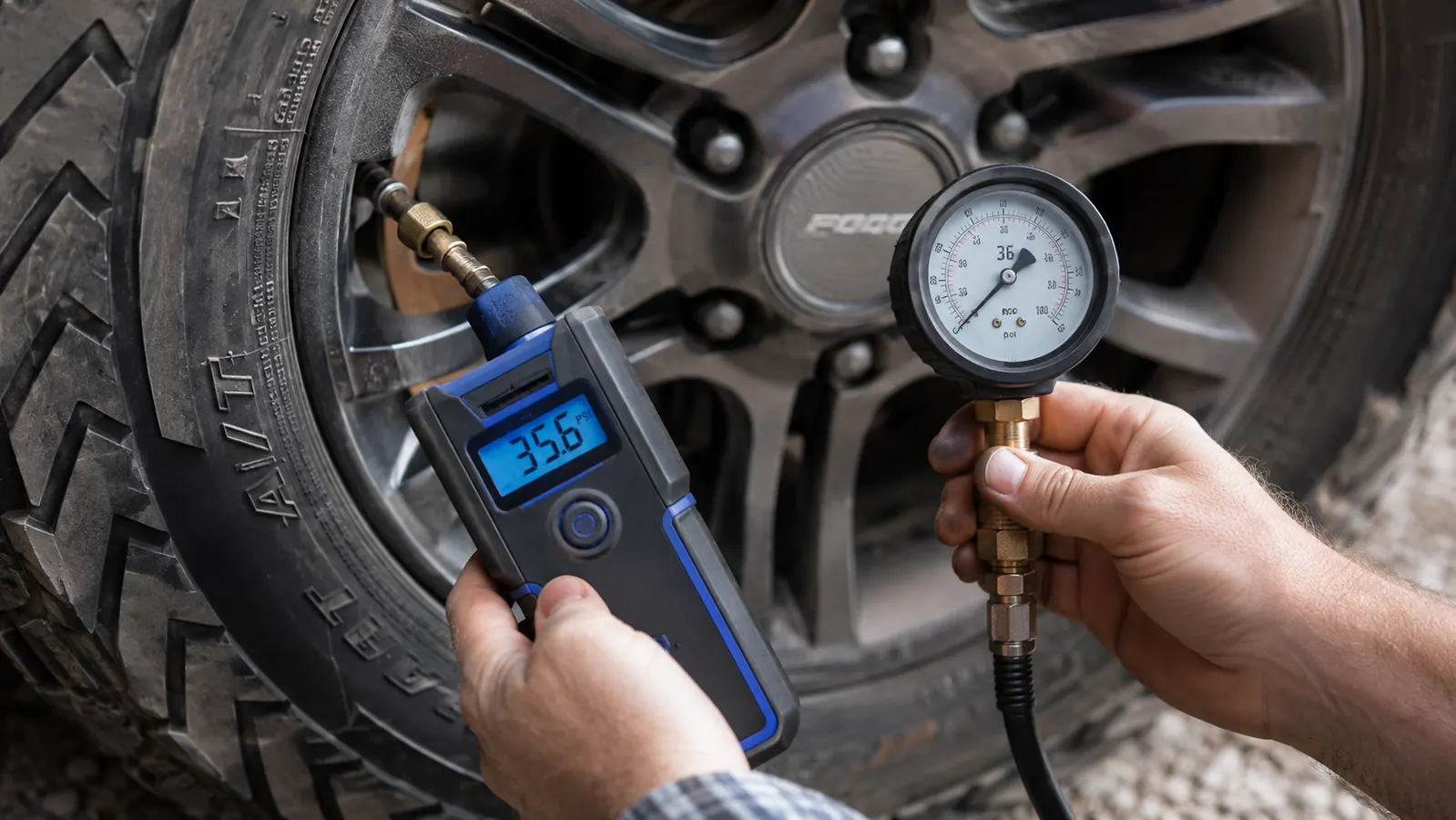
The digital display is genuinely convenient, and for a while I trusted it completely. Then I started cross-checking it against a separate handheld dial gauge I keep in the glovebox, mostly out of curiosity, and found a gap. On the same tire, checked back to back within a minute or two of each other, the pump's own readout has run anywhere from one to three PSI higher than the dedicated gauge, and that gap hasn't been perfectly consistent from one session to the next. It's not wildly off, and it's well within the range you'd expect from a built-in gauge on an inexpensive combo tool rather than a dedicated instrument, but it's enough that I no longer treat the pump's number as gospel.
What I do now is set the pump a pound or two under the door-jamb placard number and then confirm with the separate gauge before I call it done. That extra thirty seconds has made me more confident in what I'm actually driving on, and it's a habit I'd recommend to anyone relying on this pump as their only pressure check, especially before a long highway stretch. If you want a full side-by-side on where this pump actually stands against a gas station air machine, including cost and reliability over time, our comparison against the pump at the gas station covers that ground directly.
What I Liked
- Reaches most of a sedan or midsize SUV from a single front accessory socket
- Digital readout is close enough for daily use once you know to account for the one to three PSI gap
- Handles one or two tires at a time without any strain or heat buildup
- Auto shut-off has worked reliably every time I've set a target pressure
- LED light is a genuine help finding a valve stem in a dark parking lot
Where It Falls Short
- Noticeably loud in practice, closer to a shop vacuum than the quiet demo videos suggest
- Casing gets uncomfortably hot doing all four tires back to back without a break
- Adding a real 10 PSI takes four to five minutes per tire, not a quick top-off
- Pulls enough current to trip a marginal vehicle fuse or a worn accessory socket
- Built-in gauge drifts a few PSI from a dedicated handheld gauge and shouldn't be the only check before a long drive
By the third tire the casing was hot enough that I switched hands. That's not in any listing photo I've seen.
Who This Is For
This pump earns its keep for anyone who drives long distances between fuel stops and wants a reliable way to correct a slow leak or seasonal pressure drop without hunting for a working gas station air machine. It's also a solid fit if you're realistic about pacing yourself, letting it rest between tires, and cross-checking the reading occasionally rather than trusting it blindly for months on end. If you're weighing whether to carry one at all versus just relying on whatever air pump you find along the way, our piece on why we started carrying a pump in the first place lays out the reasoning from the other side. For us, the deciding factor was less about convenience and more about not wanting to depend on a coin-operated machine that might be broken, occupied, or simply not there when the low-tire light comes on forty miles from the nearest town.
Who Should Skip It
Skip this if you're in a genuine hurry and expect to air up four low tires in under ten minutes, because that's not the reality of any pump in this class. Skip it too if your vehicle's accessory socket is already flaky or has a history of blown fuses, since a hardworking compressor is exactly the kind of load that exposes that weakness. And skip it if you need lab-grade pressure accuracy for something like a performance setup, since a dedicated gauge will always be the more trustworthy number here. If any of those describe your situation, you're better served pairing this pump with a separate gauge from the start rather than expecting it to do everything on its own.
Know Its Limits, and It Earns a Permanent Spot in the Door Pocket
It won't beat the clock and it won't replace a good gauge, but paced correctly, it's held up to months of real use on our trips.
Amazon Check Today's Price on Amazon →