
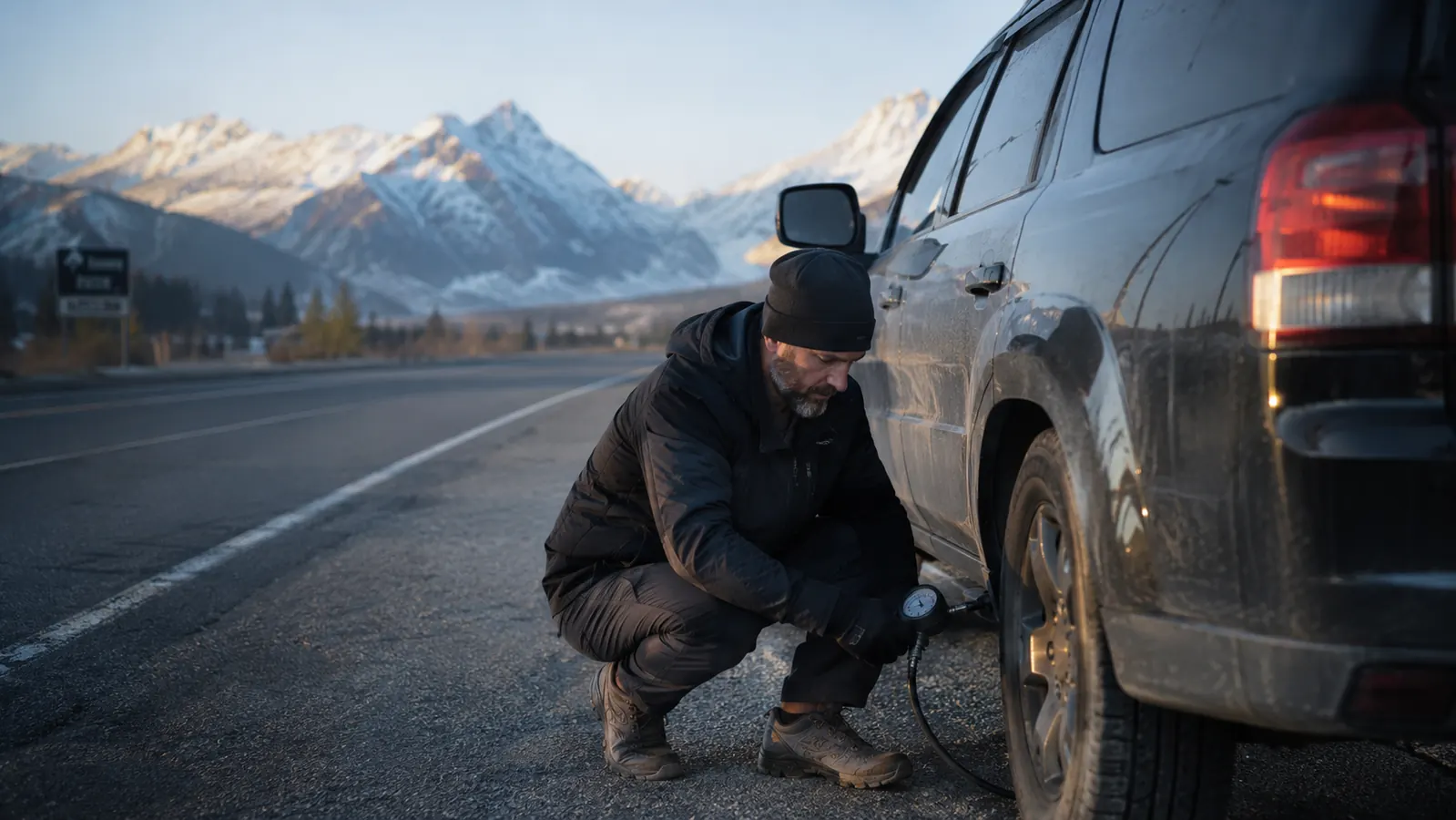
The check-engine light is annoying but the tire pressure light is the one that actually changes my route. I've had it come on outside Twin Falls, once climbing out of Elko on I-80, and once at 6am in a gas station lot in Wells, Nevada, cold enough that my breath was fogging the gauge. Every time, the fix took less than five minutes once I knew what I was doing. Before I knew what I was doing, it took a slow, worried hour of guessing, pulling into three different stations looking for a working air pump while the light stared back at me from the dash.
This is the routine I run before every multi-day trip in my 2018 4Runner, and again at least once a day while we're out. It's not complicated. It just has to be done in the right order, with the right number, or you can accidentally do more harm than good. I'll walk through checking the pressure correctly, reading a low-tire warning the right way, and fixing it yourself with a 12V inflator instead of waiting for a gas station with a working air pump. None of this is professional mechanical advice, it's the practical routine that's kept us out of trouble on a lot of miles, and for anything beyond air pressure, a real tire shop is the right call.
The trunk tool that turns a warning light into a five-minute stop, not a detour
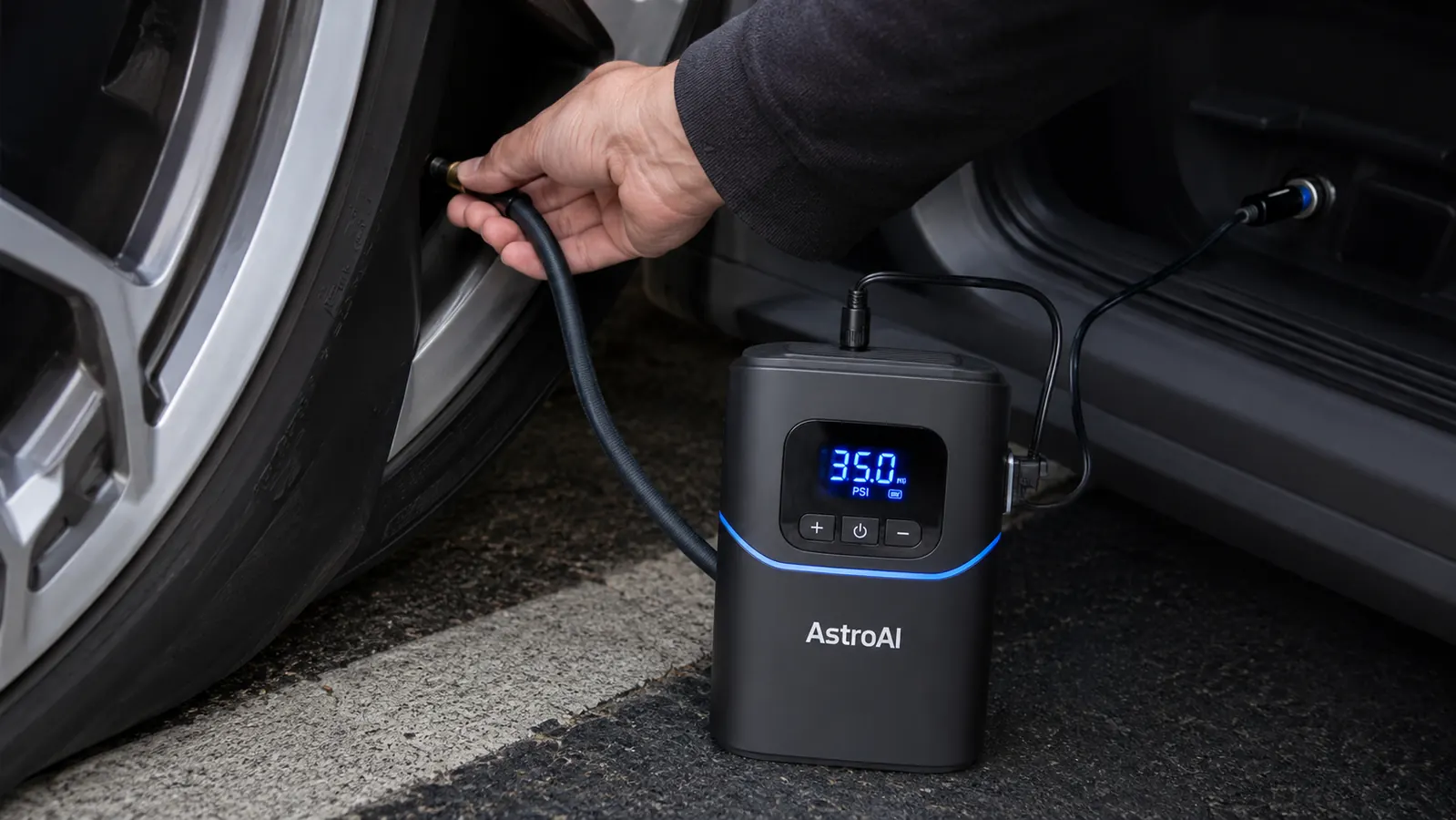
I keep an AstroAI portable tire inflator wedged behind the spare kit on every trip. Plugged into the 12V outlet, it reads pressure and adds air without needing a gas station at all.
Amazon Check Today's Price on Amazon →Step 1: Find your actual PSI number, not the one on the tire
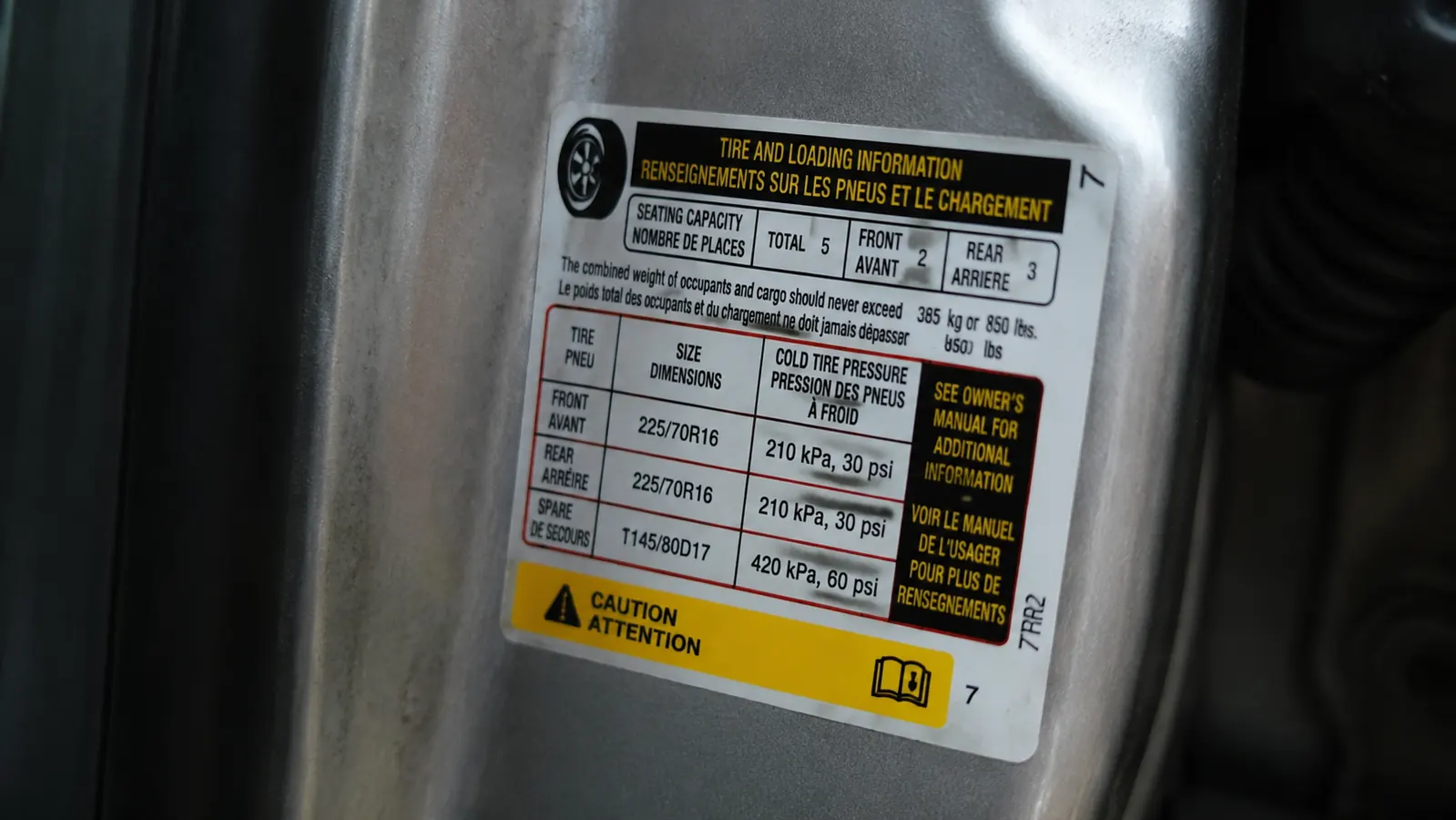
This is the step people get backwards most often, and it's the one that matters most for safety. The number molded into the sidewall of the tire itself, something like '44 PSI MAX', is the maximum pressure that tire can safely hold, not the pressure your vehicle needs. Inflating to that number will overinflate most passenger vehicles, and an overinflated tire rides harsher, wears unevenly down the center of the tread, and has less grip in a hard stop than one set to spec.
The number you actually want is on a sticker inside the driver's door jamb, or in the owner's manual under tire information. On my 4Runner it's printed right on the door frame: 32 PSI front, 32 PSI rear, cold. That placard accounts for the vehicle's weight, suspension, and how the tires actually behave under real driving conditions, which is why it's the number the manufacturer wants you using, not the tire's ceiling. Two vehicles wearing the exact same tire can call for two different PSI numbers, because the placard is about the car, not the rubber.
If you're renting a car or driving something new to you, take thirty seconds before you leave the lot to find that sticker and either photograph it or write the number on a sticky note in the glove box. I do this every time Rennie and I pick up a rental, because I've been burned once by assuming a number that turned out to be wrong for that specific trim, a slightly different tire size than I expected changed the recommended PSI by three pounds.
Step 2: Check the pressure cold, with your own gauge
"Cold" doesn't mean the weather. It means the tire hasn't been driven on recently, ideally it's been sitting for at least three hours or you haven't gone more than a mile or two. Driving heats the air inside a tire and raises the reading, so a pressure check done after twenty minutes on the highway will read artificially high even if the tire is actually low. I check first thing in the morning before the 4Runner has moved, every single travel day, before coffee, before loading the cooler, before anything else.
Use an actual gauge rather than eyeballing the tire or trusting how it feels underfoot. A tire can look and feel normal while running 6 or 8 PSI under spec, especially on larger, stiffer-sidewall tires like the ones on an SUV. Unscrew the valve cap, press the gauge straight onto the stem until the hiss stops, read the number, and put the cap back on so dirt and moisture stay out of the valve. Do all four tires plus the spare, every time, not just the one that looks a little soft, because a spare that's been sitting low for six months does you no good the one time you actually need it.
Write the readings down somewhere, even just in your phone's notes app, if you're doing a long multi-day trip. Over a few days you start to notice patterns, one tire that consistently runs 2 PSI under the others is worth watching for a slow leak, which is a very different problem than pressure that drops evenly across all four from cold mornings. I've caught a slow leak this way before it turned into a flat, just from noticing the same tire needed a top-off three mornings running.
Step 3: Understand why pressure swings on the road, and read the TPMS light correctly
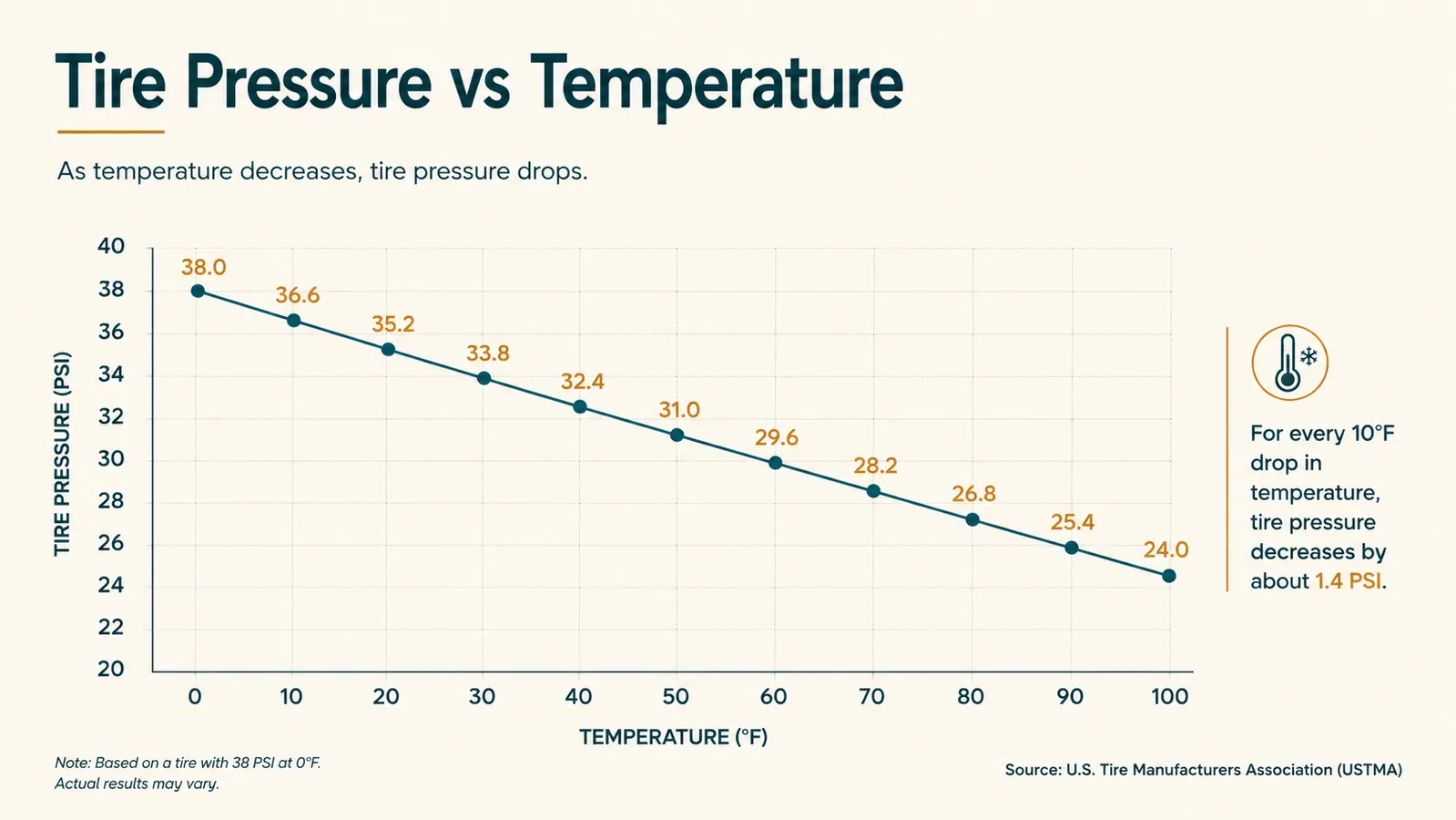
Tire pressure isn't fixed once you set it. It moves with temperature, roughly 1 PSI for every 10 degree drop, and it moves more than most people expect on a road trip that covers a lot of elevation and a wide temperature range in a single day. Leave Boise at 6am with the temperature at 58 degrees, climb to a mountain pass where it's 38, and your tires can lose several PSI along the way without anything being wrong with them mechanically. Altitude itself has a smaller effect, but the temperature swing that comes with it is the real driver.
This is exactly why the TPMS warning light matters and why it deserves a real check, not a shrug. If that light comes on, check all four tires and the spare, not just whichever one you assume is the culprit. Sometimes it's one tire with a genuine slow leak. Sometimes it's every tire reading a little low because the morning is 25 degrees colder than when you last set them. Either way, don't guess. Get out the gauge, check every tire, and only then decide what the light is actually telling you.
A slow, gradual pressure drop across a trip through changing elevation and temperature is normal and expected. A single tire dropping fast, or a tire that keeps needing air every day when the others hold steady, is a different situation and points to an actual leak, a nail, or a valve stem problem rather than weather. That distinction is the whole reason to keep a written log instead of trusting memory.
Step 4: Add air yourself with a portable inflator instead of hunting for a working air pump
For years my plan when a tire ran low was "find a gas station with an air pump." That plan has let me down more than once, coin-operated pumps that are broken, out of order, or simply don't exist for the next sixty miles of a rural stretch. The AstroAI inflator I keep in the cargo area now plugs straight into the 4Runner's 12V outlet, and I set the digital display to my door-jamb number, 32 PSI, then let it run. It shuts off automatically once it hits that target, which matters, because it removes the guesswork and the chance of overinflating past spec while you're distracted loading groceries into the back seat.
The whole process from unrolling the cord to putting the valve cap back on takes me about four minutes per tire. I've used it on the shoulder outside Elko, in a rest stop parking lot near Baker City, and once in our own driveway in Boise on a morning that had dropped 20 degrees overnight. Every time, it was faster than driving to find a working pump, and I never had to feed it quarters or guess whether it was calibrated correctly. I get into more of the day-to-day reality of using it, including the noise level, the cord length, and how it's held up over a full year of trips, in the full long-term AstroAI review.
One honest limitation worth naming up front: an inflator tops off air, it does not repair anything. If a tire has a nail in it, a sidewall bulge, or is losing air fast enough that you're refilling it every hour, that's a puncture or damage situation, not a low-pressure situation, and it needs an actual tire shop, not more air. Topping it off can buy you the miles to get there safely, but treat it as a bridge to a repair, not the repair itself. I've done exactly that once, topped off a slow leak twice in one afternoon to get us to the next town with a tire shop, rather than pretending the inflator had solved the underlying problem.
Step 5: Recheck as the trip goes, especially with big weather or altitude swings
On a single-day errand around Boise, I don't think about tire pressure again after the morning check. On a multi-day trip, I recheck it every morning before we pull out of wherever we stayed the night, cold, before the tires have moved. If the forecast shows an overnight temperature drop of 20 or 30 degrees, which happens constantly once you're up in elevation in the mountain west, I expect the reading to be a few PSI lower than the day before and I don't panic about it. I just correct it back to the placard number and move on with the day.
If you're comparing a portable inflator against just relying on whatever pump you find along the way, I laid out the actual tradeoffs, cost, reliability, and how often gas station pumps are simply broken, in this comparison of the two approaches. Short version: having your own gauge and inflator means the health of your tires is never dependent on someone else's equipment working, and that's worth more to me on a remote stretch of highway than it ever is close to home.
What Else Helps
A pressure check is half the routine. The other half is a quick visual walk-around, looking for anything embedded in the tread, uneven wear that suggests an alignment issue, or a sidewall bulge, which is a sign of internal damage that no amount of air pressure fixes. I also keep valve caps snug and replace any that are cracked, since a bad cap lets a slow leak start where none existed before. A small tread depth gauge or the simple penny test takes ten seconds and tells you whether the tires even have enough tread left to be trusted on wet mountain roads, which matters just as much as pressure does.
None of this replaces a real inspection, and none of it is meant to be professional mechanical advice. If a tire looks damaged, is losing air fast, or a shop mechanic flags something during an oil change, get it looked at by a tire shop rather than trying to manage it yourself on the road. The routine above is about catching the ordinary stuff, cold mornings, mountain passes, a slow leak worth noticing, before it turns into the kind of problem that needs a tow truck instead of a gauge.
The number on the tire's sidewall is the ceiling. The number on the door jamb is the actual answer. Mixing those two up is the single most common tire mistake I see.
Don't let a warning light decide your route for you
A portable inflator with a digital gauge means you check and correct pressure on your own schedule, not whenever you happen to pass a working pump.
Amazon Check Today's Price on Amazon →